Water is a precious resource in India.
The pressure on water supply is increasing every year.
Rapid urbanization, rising populations, and climate change are making fresh water scarce.
At the same time, construction activity uses large amounts of water for concrete mixing, curing, dust control, cleaning, plastering, landscaping, and more.
This creates a strong need to reuse wastewater in construction.
Wastewater reuse in construction means treating and using water that has already been used once.
Reusing wastewater saves fresh water, lowers construction cost, reduces pollution, and supports sustainability.
This guide explains why wastewater reuse matters, how it works, the methods and technologies, examples of application in India, the benefits and challenges, standards and safety, cost considerations, case studies, FAQs, and a conclusion.
The language is simple. Sentences are short. The article is polished for Indian audience and construction professionals. Key phrases used naturally include wastewater reuse, greywater recycling, treated wastewater in construction, construction water recycling, water conservation in construction, effluent treatment, sustainable building practices India, and water reuse technologies.
Why wastewater reuse is important in construction

Water demand in construction is high.
Concrete needs water for mixing and curing.
Site equipment and vehicles need washing.
Dust must be controlled.
Landscaping and site restoration require irrigation water.
Using fresh potable water for all these tasks wastes a valuable resource.
Many parts of India already face water shortages.
Cities like Delhi, Bengaluru, Chennai, and Pune have recurring water stress.
Groundwater levels are dropping rapidly.
In rural areas, groundwater depletion affects crops and livelihoods.
Reuse of wastewater helps reduce water intake from freshwater sources.
It also reduces the effluent load released into drains and rivers.
Discharging untreated wastewater causes pollution.
Indian national and state governments are promoting water conservation.
Reusing wastewater supports Sustainable Development Goals (SDGs) and national water policy.
It also helps obtain green building ratings for sustainability certifications like IGBC, GRIHA, and LEED.
What is wastewater
Wastewater is any water that has lost its original quality after use.
It includes water used in homes, offices, industries, and construction.
There are different categories:
- Greywater: Water from showers, basins, laundry, and faucets.
- Blackwater: Water from toilets, urinals, and kitchen sinks with high organic load.
- Construction runoff: Water that carries soil, cement, sand, and dust from site.
- Industrial effluent: Water from industrial processes mixed with chemicals.
For reuse in construction, greywater and treated wastewater are most commonly used.
Blackwater needs more treatment and usually is sent to sewage treatment plants.
Types of wastewater reuse in construction
- Direct reuse: Using treated wastewater directly on the site without discharge to municipal sewers.
- Indirect reuse: Treated wastewater is discharged to sewers or groundwater and reused later through municipal supply.
- Onsite reuse: Treated wastewater is used within the same construction site.
- Offsite reuse: Treated wastewater from a treatment plant is supplied to construction sites.
The focus here is mainly on direct and onsite reuse, as these provide immediate benefits to construction projects.
Sources of wastewater in construction projects
Construction sites generate water from several activities:
- Concrete mixing and curing
- Formwork cleaning
- Vehicle and equipment washing
- Dust suppression sprays
- Site toilets and labour camps
- Landscape irrigation after construction
- Water from dewatering activities in excavations
These wastewater streams have different qualities.
Concrete wash water is alkaline and has fine solids.
Canteen wastewater has organic matter.
Greywater from toilets and washing requires biological treatment.
Treatment methods for construction wastewater reuse

To reuse wastewater safely, treatment is essential.
The level of treatment depends on the intended use.
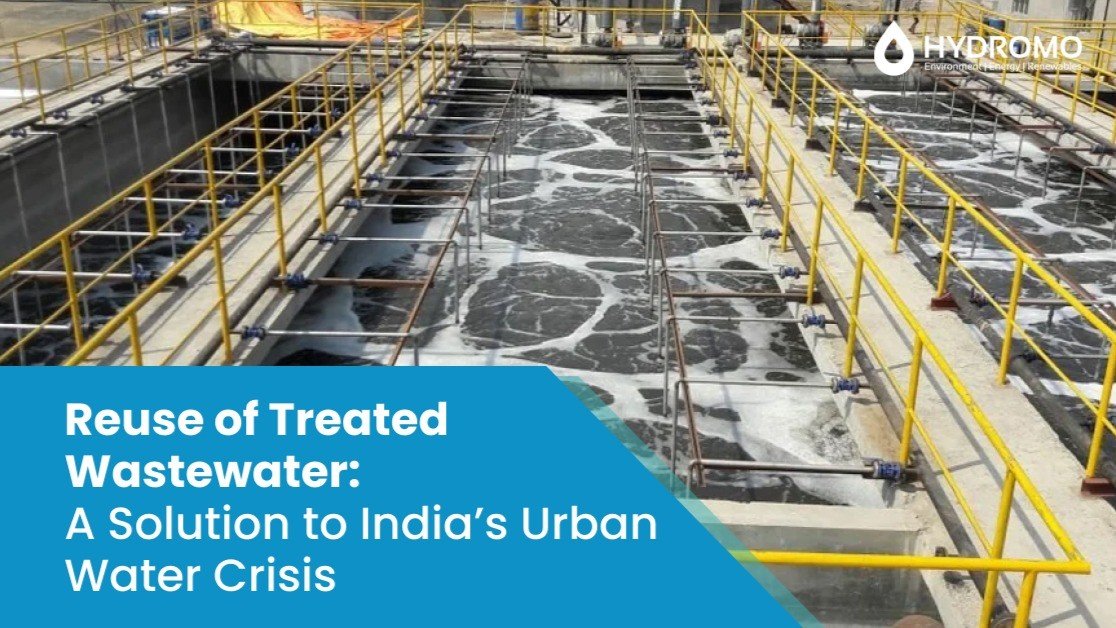
The key steps in treatment include physical, chemical, and biological processes.
Physical treatment
Screening removes large particles like debris, plastics, wood, and stones.
A bar screen or sieve filter is used.
Sedimentation allows soil, sand, cement particles, and other solids to settle in a tank.
The settled solids are called sludge.
Filtration passes water through media such as sand, gravel, or cartridge filters.
This removes finer suspended solids.
Chemical treatment
Coagulation and flocculation involve adding chemicals like alum or polymers.
These bind small particles into larger clumps called flocs.
These flocs settle easily.
Disinfection kills pathogens.
Common disinfectants are chlorine, ozone, and UV light.
For construction use, chlorine disinfection is widely used because it is easy and cost effective.
Biological treatment
Biological treatment uses microbes to break down organic matter.
This is mainly used for blackwater or high organic wastewater.
Constructed wetlands, anaerobic and aerobic digesters are common systems.
However, for construction reuse, biological treatment is used less often.
Most reuse applications involve greywater and low strength wastewater.
Levels of water quality for different reuse applications

Different construction tasks need different water quality.
For example, potable quality is needed for drinking and sanitation.
Lower quality water can be used for curing, washing, and irrigation.
The table below shows typical quality requirements:
| Application | Turbidity | Biological Risk | Treatment Level |
|---|---|---|---|
| Drinking and cooking | Very low | None | Advanced, potable |
| Curing concrete | Moderate | Low | Sedimentation + filtration |
| Vehicle washing | High | Medium | Coagulation + filtration |
| Dust suppression | Moderate | Low | Filtration |
| Landscaping irrigation | Low | Medium | Disinfection |
| Toilet flushing | Low | High | Filtration + disinfection |
This table helps decide how much treatment is needed before reuse.
Also Read Lateral Loads in Construction – Complete Guide for Engineers and Site Teams (India Focus)
Wastewater reuse systems for construction sites
Construction sites can install several treatment systems.
The choice depends on space, cost, and water quality required.
1. Portable treatment plants
These are compact and mobile.
They can be moved from site to site.
Portable systems often include screening, sedimentation and filtration modules.
2. Modular treatment systems
Modular systems are pre-engineered units.
They combine physical, chemical and disinfection units.
These can be expanded or connected in series.
3. Settling tanks with filtration
Simplest and most cost effective for small sites.
A settling tank followed by sand filtration and chlorination can provide water for curing and dust control.
4. Greywater recycling systems
These systems treat shower, kitchen and bathroom wastewater at labour camps.
Treated greywater is reused for flushing, washing, and site tasks.
5. Constructed wetlands
These use plants and natural processes to treat wastewater.
They are low energy and suitable for large sites with open space.
How treated wastewater is used on site
Water for concrete curing
Fresh concrete needs water for proper hydration.
Using treated wastewater cuts fresh water demand.
Dust control
Dust on roadways, stockpiles and open soil causes air pollution.
Spraying treated water keeps dust down.
Equipment and vehicle washing
Heavy machines and trucks need cleaning.
Treated wastewater reduces the need for fresh water.
Toilet flushing in labour camps
Using treated greywater for toilet flush saves potable water.
Landscaping
After construction, treated wastewater irrigates lawns and plants.
Soil compaction
Water is needed in earthworks for compaction.
Using treated wastewater can reduce fresh water use.
Benefits of wastewater reuse in construction
Reusing wastewater has many benefits:
Conserves fresh water
This is the biggest benefit.
It reduces demand on municipal sources and groundwater.
Reduces cost
Treated wastewater is often cheaper than tanker or municipal water.
It also reduces wastewater disposal cost.
Reduces environmental impact
Less extraction of water reduces stress on rivers and aquifers.
Supports sustainability ratings
Green building certifications reward water reuse and recycling.
Reduces pollution
Treated water reuse lowers discharge of untreated effluent into drains.
Improves community relations
Best practices reduce site impact on local residents and water resources.
Challenges and risks of wastewater reuse
Reuse has challenges:
Treatment cost and maintenance
Installing and running treatment plants costs money.
Maintenance and skilled operators may be needed.
Quality control
Water quality must be monitored to avoid harmful pathogens or chemicals.
Regulatory compliance
Wastewater reuse must meet local environmental norms and building rules.
Public perception
People may fear using treated water due to hygiene concerns.
Regulations and standards for wastewater reuse in India
India has several policies and guidelines:
- Central Ground Water Authority (CGWA) promotes treated wastewater use.
- National Building Code encourages recycling of wastewater in buildings.
- State municipality rules may require dual plumbing for toilet flushing.
- Green building rating systems like IGBC and GRIHA award points for reuse.
Designers and contractors must follow local pollution control board norms for discharge and reuse.
Steps to implement wastewater reuse on a construction site
- Survey water sources and demand
Identify where wastewater is generated and where water is needed. - Choose the treatment technology
Decide on portable, modular, settling tank or greywater system. - Design the treatment plant
Size the units based on volume and quality needed. - Build or install the system
Ensure level, access, and safety. - Connect reuse points
Provide separate piping to curing, dust control, washing, flushing and irrigation. - Monitor water quality
Test turbidity, pH, pathogens and chemical content. - Maintain equipment
Clean filters, repair pumps and check disinfection systems. - Train site workers
Teach safe handling and monitoring procedures.
Cost aspects of wastewater reuse
Initial cost depends on technology:
| System | Approx. Cost Range (INR) | Notes |
|---|---|---|
| Settling + Sand Filtration | 30,000–80,000 | Small sites |
| Greywater recycle unit | 50,000–1,50,000 | Labour accommodations |
| Modular treatment plant | 2,00,000–10,00,000+ | Medium to large sites |
| Portable units | 1,00,000–5,00,000 | For multiple sites |
| Constructed wetlands | 1,50,000–7,00,000 | Depends on land area |
Operating cost includes power, chemicals and maintenance.
Cost saving comes from reduced use of tanker water or municipal supply.
Case studies in India
Example 1: High rise under construction in Chennai
A large residential project installed a modular wastewater treatment system.
Treated water was used for curing, dust control and toilet flushing.
Fresh water use dropped by 50% during peak construction.
The project also reduced wastewater discharge to city drains.
Example 2: Labour camp in Punjab
Greywater from bathrooms was treated using sand and activated carbon filters.
Treated water was used for toilet flushing and floor cleaning.
The system cost was low and labour camps saved on potable water supply.
Example 3: Bridge construction site in Maharashtra
Runoff from dewatering and earthworks was collected in settling tanks.
Clear water was used for soil compaction and truck washing.
The site avoided tanker water costs.
Frequently Asked Questions (FAQs)
What is the best wastewater treatment for small sites?
A settling tank with sand filtration and chlorination is simple and cost effective.
Can treated wastewater be used for drinking?
No. Treated wastewater is not suitable for drinking unless treated to potable standards in advanced plants.
How often should treated water be tested?
Weekly testing for turbidity, pH and bacteria is recommended on active sites.
Is it legal to reuse wastewater in India?
Yes, if treated according to local pollution board guidelines and building codes.
Can wastewater reuse help green building certification?
Yes. Ratings like IGBC and GRIHA give points for water reuse systems.
Conclusion
Wastewater reuse in construction is both practical and necessary for sustainable building in India. It helps reduce demand on freshwater sources, cuts costs, reduces pollution and improves sustainability ratings. With simple systems like settling tanks and sand filters, many sites can reuse water for curing, dust control, washing, irrigation and flushing. Larger sites benefit from modular treatment and greywater recycling systems.
Success requires proper design, monitoring and training. Local regulations should be followed to protect health and the environment. Reusing wastewater supports water conservation and ensures a greener future for Indian cities. Future construction projects should include wastewater reuse planning from the start. This reduces environmental impact, improves community relations, and lowers long term operating cost.
If you want, I can share a step-by-step checklist for setting up a wastewater reuse system on your construction site, or a template to calculate water savings and cost benefits. Tell me which one you need.