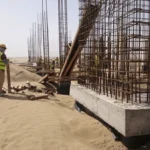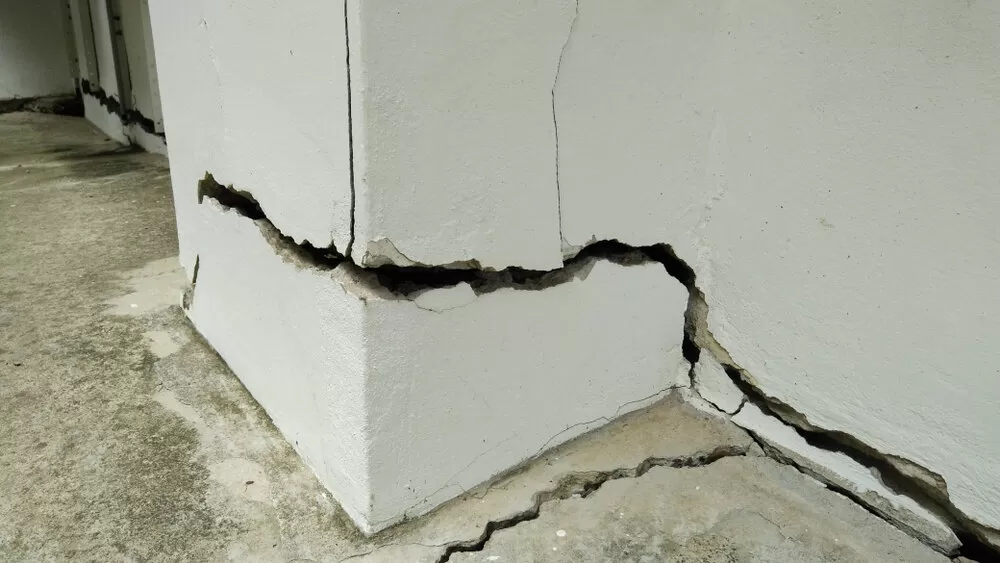
Footings are the base of every building. They transfer the load of the structure to the ground. If footings crack, the whole building may develop problems. Cracks in footings can seriously affect safety and durability. This article explains in detail why footing cracks occur, how to identify them, how to prevent them, and how to repair them.
This guide is written in clear, simple English. Sentences are short for easy reading. It reflects common Indian construction conditions, materials, soils, monsoon effects, and site challenges. It includes tables, examples, cause lists, FAQs, and a conclusion. Important keywords like footing cracks, foundation failure, soil settlement, design error cracks, construction defects, shrinkage cracks, Indian building site issues, structural cracks, and waterproofing in footings are included naturally for SEO optimization.
What Is a Footing?
Footings are the bottom part of the foundation.
They support columns, walls and load-bearing structures.
Their job is to spread the load over a larger area of soil.
Good footing design and construction are critical for stable buildings.
In India, footings are usually made of reinforced concrete.
Different types include isolated footings, strip footings, combined footings, raft footings, and pile foundations.
Footing failure often shows first as cracks.
Cracks are a sign that something is wrong in design, soil, environment, or work quality.
The Importance of Sound Footings
The footing supports the entire load of the building.
If it fails, walls may crack, floors may tilt, and doors and windows may misalign.
Severe footing cracks can lead to settlement, tilting, and even collapse.
Footing performance depends on many factors:
- Soil bearing capacity
- Water condition in soil
- Load from structure
- Material quality
- Construction practices
Problems often appear long after the building is complete.
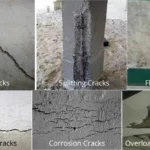
Common Types of Footing Cracks
Footing cracks vary in shape and severity. Here are common types seen on construction sites:
| Crack Type | Description | Indication |
|---|---|---|
| Hairline cracks | Fine, thin cracks | Minor shrinkage or curing issues |
| Vertical cracks | Cracks going up/down | Uneven settlement |
| Horizontal cracks | Cracks across footing | Lateral soil pressure |
| Diagonal cracks | Slanted cracks | Differential settlement or flexural stress |
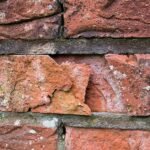
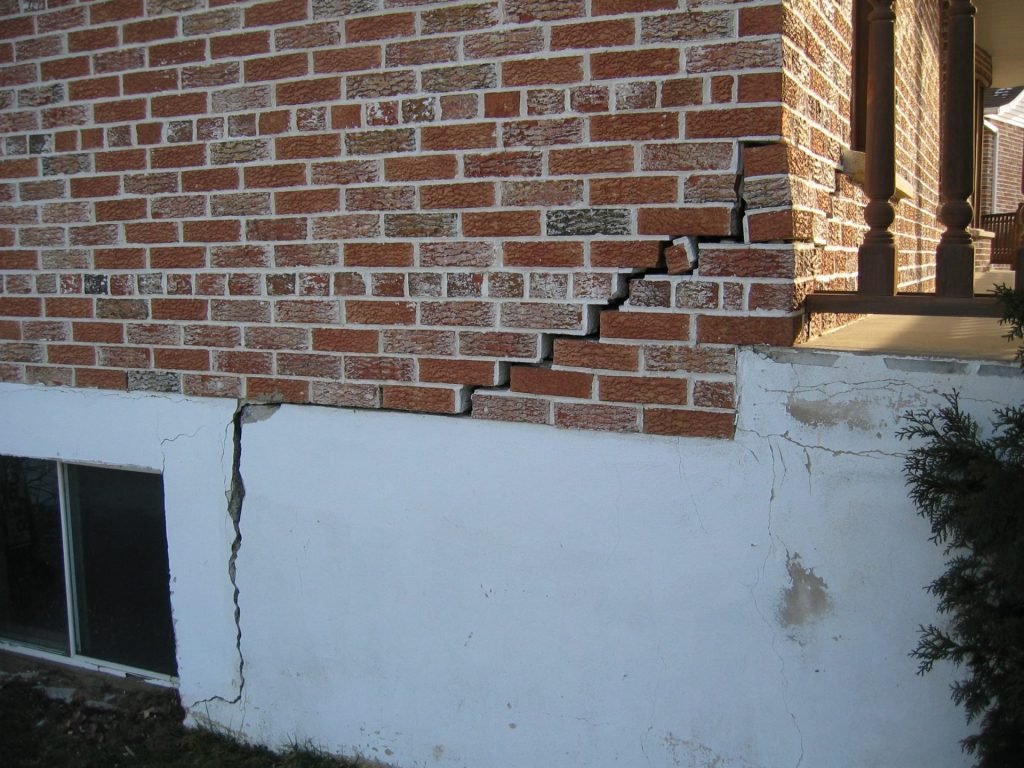
| Step cracks | Stair-step pattern | Soil movement or shrinking soil |
Each type gives a clue about cause and severity.
Major Reasons Why Footing Cracks Occur
Footing cracks are caused by many factors. Most problems fall into three categories: soil related, design related, and construction related. These factors often combine to make cracks worse.
Also Read Can Waterproofing Be Done After Construction?
1. Soil and Ground Conditions
1.1 Uneven Soil Settlement
Soils settle when load is applied.
If the soil under one side of the footing compresses more than the other, differential settlement occurs.
This causes bending and cracks.
This is common in areas with weak soils such as black cotton soil found in parts of central India.
Filling, compaction, and untreated subgrade can make settlement worse.
1.2 Expansive Clay Soil
Some soils absorb water and swell.
Later they shrink when dry.
This cycle pushes and pulls the footing, causing cracks.
1.3 Loose or Poor Compacted Soil
If soil is not compacted properly before pouring footings, it will settle later.
Loose soil settles under load, pulling the footing apart.
1.4 High Water Table
Water weakens soil strength.
In monsoon seasons in India, water level rises.
This can reduce bearing capacity, causing uneven support and cracks.
1.5 Soil Erosion
Water flow under the footing washes away soil.
This makes voids and weak spots.
Voids cause sudden settlement and cracking.
2. Poor Design and Planning
2.1 Inadequate Size and Depth
Footing must be sized to carry load safely.
If designed too small, stresses become too high.
This causes structural cracks.
2.2 Wrong Soil Bearing Assumption
A soil test must be done before design.
If the engineer assumes soil is strong but it is weak, the footing will settle and crack.
2.3 Improper Load Calculation
Engineers must consider live load, dead load, wind load, and seismic forces.
Missed loads cause overload on footing, leading to cracks.
2.4 Ignoring Water Effects
If drainage and waterproofing are not planned, water will affect soil and load distribution.
This error shows up as cracking later.
2.5 Combining Different Footing Types
When different footings are connected improperly, stresses get redistributed unevenly.
This causes cracks at junctions.
3. Construction Errors
3.1 Poor Concrete Mix
Concrete must have correct cement, sand, aggregate and water ratio.
If the mix is too weak, the footing lacks strength.
3.2 Inadequate Reinforcement
Steel bars must be placed as per design.
If bars are missing or wrongly placed, the footing cannot resist tension and shear.
3.3 Bad Compaction of Concrete
Concrete must be compacted to remove air voids.
Uncompacted concrete has weak spots that crack easily.
3.4 Improper Curing
Concrete needs water to cure.
If curing is not done for 7–10 days, the strength is reduced and cracks form.
3.5 Use of Poor Quality Materials
Bad cement, contaminated water, dirty sand, and broken bricks in concrete weaken footing.
3.6 Uneven Load During Construction
Heavy machinery, material stacking, and unequal loads during construction can stress footings and cause cracks.
4. Environmental and External Factors
4.1 Heavy Monsoon Rains
In India, heavy wet season rains cause soil saturation.
Saturated soil loses strength and causes settlement cracks.
4.2 Floods and Waterlogging
Flooded ground softens soil and affects footing support.
4.3 Nearby Excavation
Excavating near an existing structure changes soil stress and may induce movement and cracks in footings.
5. Material and Durability Issues
5.1 Corrosion of Reinforcement Bars
Rusted steel loses strength and expands.
This creates internal pressure and cracks in concrete.
5.2 Alkali–Aggregate Reaction
Some aggregates react chemically with cement over time.
This causes expansion and cracking.
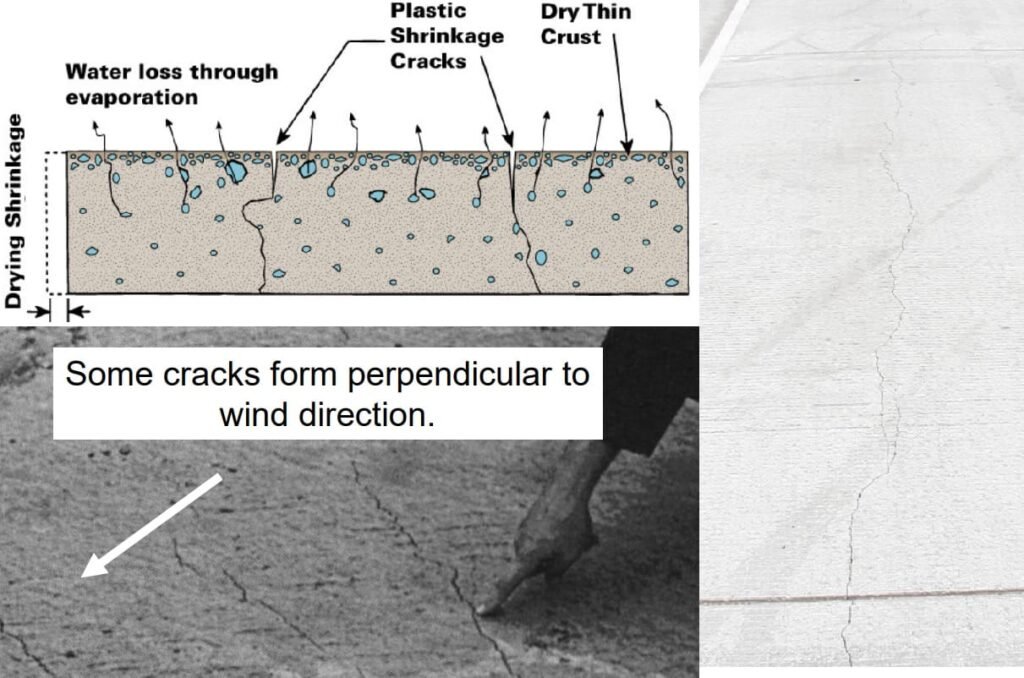
6. Shrinkage and Thermal Effects
Concrete shrinks as it dries.
In footings with large dimensions, shrinkage creates internal stress.
Without proper control joints and reinforcement, shrinkage causes cracks.
Thermal expansion and contraction due to temperature changes also cause stress.
Recognizing Footing Cracks on Site
Correct diagnosis is essential to fix the problem. Here are common symptoms:
- Fine hairline cracks shortly after curing — likely shrinkage.
- Wide cracks at edges — possible settlement.
- Cracks near soil line — earth pressure or soil movement.
- Cracks in diagonal pattern — uneven settlement.
- Stepped cracks — soil differential movement.
Site inspection tools include:
- Visual inspection
- Crack width gauge
- Leveling instruments
- Moisture meter
- Soil testing reports
- Load path checks
Differences Between Foundation Cracks and Footing Cracks
| Feature | Footing Cracks | Foundation Wall Cracks |
|---|---|---|
| Location | At base slab or under columns | In vertical foundation walls |
| Cause | Soil settlement, overload | Lateral pressure, water pressure |
| Pattern | Horizontal or diagonal at base | Vertical, stair-step |
| Severity | Affects load transfer | Affects wall stability |
| Detection | At ground level | Visible on walls |
How Footing Cracks Affect the Structure
Footing cracks lead to several issues:
- Tilted columns and walls
- Cracks above ground level
- Uneven settlement
- Joint displacements
- Plumbing and flooring cracks
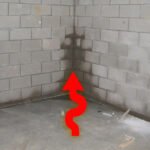
- Water seepage and dampness
- Ultimate structural failure
Left unchecked, small footing cracks can grow into major structural problems.
Methods to Prevent Footing Cracks
Good planning and care during design and construction prevent most cracks.
Proper Soil Investigation
Carry out soil tests before design.
Design footings based on soil bearing capacity.
Correct Footing Design
Size footing properly for load and soil conditions.
Consider monsoon season water effects and site slopes.
Quality Materials and Mix
Use approved cement, graded aggregates, clean water and good sand.
Design concrete mix for sufficient strength.
Proper Reinforcement
Place steel bars exactly as designed.
Maintain correct cover and spacing.
Correct Compaction and Curing
Compact concrete fully.
Cure for at least 7 days in hot weather and 10–14 days in cool weather.
Good Site Management
Avoid stacking heavy loads close to fresh footings.
Control water near footing area.
Water Proofing and Drainage
Provide surface and subsurface drainage to keep soil stable and dry.
Repair Methods for Footing Cracks
Repair depends on cause and severity.
Minor Shrinkage Cracks
Use epoxy injection or stitching.
Clean cracks and fill with suitable binder.
Settlement Cracks
Underpinning or grouting may be needed.
Inject cement or polyurethane grout under footing.
Water-Related Cracks
Improve drainage and waterproofing.
Use chemical grouting to block water.
Major Structural Cracks
Get a structural engineer’s advice.
You may need partial rebuilding of footing.
Cost Implications of Footing Cracks
Cracks increase cost when they are not fixed early.
Repair costs include:
- Material repair cost
- Labor cost
- Soil treatment cost
- Drainage and waterproofing cost
Rebuilding footings costs far more than proper construction from the start.
Comparison Table — Causes vs. Solutions
| Cause of Crack | Most Likely Pattern | Solution |
|---|---|---|
| Settlement | Diagonal or wide cracks | Soil improvement, underpinning |
| Poor compaction | Random small cracks | Recompaction, re-pour |
| Shrinkage | Hairline cracks | Control joints, curing |
| Water pressure | Horizontal at base | Drainage, waterproofing |
| Heavy load | Cracks near column | Redesign and strengthening |
| Poor mix | Multiple small cracks | New concrete design |
| Corrosion | Spalling cracks | Replace reinforcement, patch |
Case Examples (India Features)
Example 1 — Settlement Crack in Mumbai Site
A residential project in Mumbai used isolated footings on black cotton soil.
After monsoon, footings settled more on one side.
Diagonal cracks appeared.
Solution: Soil grouting beneath footings and improved drainage.
Example 2 — Shrinkage Crack in Bangalore
In hot dry climate of Bangalore, a site reported hairline cracks in footings soon after curing.
Cause: Rapid drying and poor curing.
Solution: Extended curing, moist covering, and shrinkage additive for future pours.
Example 3 — Water Seepage Crack in Delhi
A basement footing in Delhi saw horizontal cracking at soil line.
Cause: Groundwater pressure and poor drainage.
Solution: External drainage trenches, waterproofing membrane, and subsoil drains.
How to Monitor Footing Health
Monitoring long term avoids sudden failures:
- Use simple crack monitors
- Periodic leveling surveys
- Regular soil moisture checks
- CCTV for underground inspection where possible
- Record rainfall and waterlogging events
This helps track changes over time.
FAQs
Q1. Can small footing cracks be ignored?
No. Even small cracks can grow. Early repair prevents bigger problems.
Q2. Do all footings crack?
Not all. But small shrinkage cracks are common. Major cracks are a problem.
Q3. Is soil type important for cracks?
Yes. Weak, expansive and poorly compacted soils are high risk.
Q4. What is the best cure for shrinkage cracks?
Proper curing and moisture control help reduce shrinkage.
Q5. When should an engineer be called?
If cracks are wide, growing, or affecting columns and walls.
Q6. Can waterproofing prevent footing cracks?
Waterproofing controls moisture but cannot fix design or load errors. It helps with water related cracks.
Conclusion
Footing cracks occur for many reasons. They happen because of poor soil, weak design, bad construction, water problems, settlement, shrinkage, and environmental effects. In India, monsoons and varied soil types make footing performance even more critical. Cracks may be small and harmless or large and dangerous. Detecting the cause correctly is vital. Repairs must match the underlying issue.
Preventing footing cracks starts long before construction. Proper soil investigation, design, quality materials, good workmanship, careful curing, and drainage make footings strong. If cracks occur, early action saves cost and increases safety.
Strong footings support strong buildings. Avoiding footing cracks is a key part of sustainable and safe construction in India. With good planning, diligent work, and proper follow up, many footing problems can be prevented or fixed successfully.