Materials are the foundation of every building. They determine the strength, durability, safety, and cost of a structure. Whether it is concrete, steel, bricks, mortar, tiles, paints, waterproofing products or electrical items, all materials must be approved before use. This ensures quality, compliance, safety and project success.
This detailed article explains the Construction Material Approval Process in a clear, step-by-step way. It uses simple English and small sentences to make the content easy to read. It is written for engineers, site supervisors, contractors, procurement teams, quality controllers, and students in India.
The article covers: basics of material approval, importance, steps, standards, test reports, documentation, vendor qualifications, sample checks, common challenges, tips, FAQs, tables, and a conclusion. SEO-optimized keywords are integrated naturally including material approval in construction, construction material testing India, quality control process, prequalification of suppliers, site material inspection, IS standards, material submittal process, product data sheet approval, and construction quality assurance.
What Is the Construction Material Approval Process?
The Construction Material Approval Process is a system to verify, test, review and approve materials before they are allowed on site. It ensures materials meet the design requirements and Indian standards. The process protects quality, safety and performance of the structure.
Material approval is usually done before procurement, but approval may also happen at delivery or before installation.
The process involves engineers, architects, quality testers, vendors, and procurement teams.
Why Material Approval Is Important
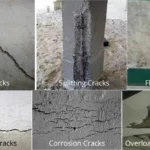
Building without approved materials invites defects. Bad materials lead to cracks, leaks, corrosion, low strength and premature failure. Approving materials early prevents rework, delays, and cost overruns.
In India, many codes and standards govern material quality. Using materials that do not comply with these standards can fail inspections and violate building permits.
Approved materials also help with water tightness, fire safety, thermal performance, and environmental requirements.
Also Read Can Waterproofing Be Done After Construction?
Key Goals of Material Approval
- Confirm compliance with project specifications
- Ensure durability and safety
- Meet design performance requirements
- Avoid costly rejections and rework
- Maintain project schedule
- Reduce site disputes over non-compliant products
Who Is Involved in Material Approval
| Role | Responsibility |
|---|---|
| Project Manager | Oversees approval process |
| Design Engineer | Sets requirements and reviews data |
| Architect | Checks aesthetic and functional conformity |
| Quality Control (QC) Manager | Collects samples and test results |
| Procurement Team | Coordinates with suppliers |
| Site Engineer | Verifies materials on site |
| Vendor/Supplier | Submits samples and documents |
| Testing Lab | Issues material test reports |
Each role is critical in ensuring the right materials are approved at the right time.
Indian Standards and Codes for Material Approval
India has well established standards for construction materials. Some of the most common standards are:
- IS 456 for plain and reinforced concrete
- IS 10262 for concrete mix design
- IS 8112 / IS 1489 for cement
- IS 1786 for TMT bars
- IS 383, IS 2386 for aggregates
- IS 269 / IS 8041 for general cement tests
- IS 9103 for concrete admixtures
- IS 4985 for brick masonry units
- IS 3067 for thermoplastic pipes
- IS 4526 / IS 7834 for tiles
Suppliers must also provide Material Safety Data Sheets (MSDS), product catalogues, performance certificates, and relevant test reports.
Stages of the Material Approval Process
In most construction projects, the material approval process follows these stages:
- Specification and Requirement Definition
- Vendor Prequalification
- Preparation of Material Submittal
- Submission to Project Team
- Review by Design and Quality Team
- Field Sample Submission (If Needed)
- Laboratory Testing and Reports
- Final Approval or Rejection
- Issuance of Approval Documents
- Onsite Verification at Delivery and Use
Let us break down each step.
1. Specification and Requirement Definition
At the beginning of the project, designers and engineers define material specifications. Specifications include:
- Material type (example: OPC 53 grade cement)
- Physical and mechanical properties
- Environmental limits
- Brand or acceptable standards
- Performance criteria
- Durability requirements
Specifications are recorded in tender documents, contracts, or material schedules.
This step ensures everyone agrees on what quality and performance levels are expected.
2. Vendor Prequalification
Before materials are sourced, vendors and suppliers must be prequalified.
Prequalification means verifying that the supplier has:
- Proper business licenses
- Experience with similar materials
- Quality control systems
- Capacity to deliver on time
Vendor evaluations may also include factory audits and past performance references.
Qualified suppliers are listed as approved vendors for the project.
Vendor prequalification reduces risk. It ensures reliable deliveries and consistent quality.
3. Preparation of Material Submittal
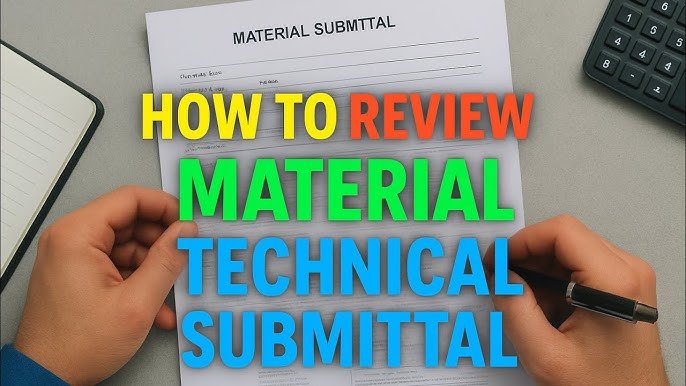
A material submittal is a package of documents that vendors send for approval. It usually includes:
- Product data sheets
- Material Safety Data Sheets (MSDS)
- Certifications
- Test reports (from certified labs)
- Manufacturer credentials
- Samples or sample boards
- Warranty and shelf life details
Submittals are prepared before procurement. They help the design and quality team check conformity early.
4. Submission to Project Team
Once the vendor completes the material submittal, it is submitted to the project team.
The submission should be:
- Clear and complete
- Properly labelled
- Accompanied by all test reports
Incomplete submissions are rejected immediately.
Submission may be done electronically or as hard copies as specified in contract documents.
Read Can Waterproofing Be Done After Construction?
5. Review by Design and Quality Team
The technical team reviews each submittal. They check:
- Compliance with design specifications
- Standards and codes referenced
- Test results match requirement values
- Product performance claims
This review is done by the Engineer of Record, Architect, and QC Manager.
A common outcome is either:
- Approved as Submitted
- Approved with Conditions
- Rejected
If changes are needed, comments are sent back to the supplier.
6. Field Sample Submission (If Needed)
Sometimes teams require physical samples. Examples include:
- Tile samples
- Paint and coating samples
- Cladding materials
- Fixture samples
Samples help check color, texture, finish, and aesthetics.
Approved samples serve as a benchmark for site inspections.
Approved samples are usually signed and kept for site reference.
7. Laboratory Testing and Reports
Lab testing is a strong part of material approval.
Common tests include:
- Compressive strength test on concrete cubes
- Tensile test for reinforcement bars
- Slump test for fresh concrete
- Aggregate gradation and water absorption
- Chemical analysis for cement
- Waterproofing membrane adhesion test
- Tile slip resistance and absorption test
Testing must be done in accredited labs.
Reports should show:
- Test method used
- Measured values
- Standards referenced
- Pass or fail status
Materials failing tests are rejected and must be replaced.
8. Final Approval or Rejection
After review and testing, the design and quality team decide:
- Final Approval
- Conditional Approval (with limitations)
- Rejection
Approved materials get a Material Approval Certificate or Approved Material List Entry.
Rejection notices clearly state reasons. Rejected materials are removed from the pool of acceptable products.
9. Issuance of Approval Documents
For each approved item, documents are issued:
- Material Approval Certificate
- Approved Submittal Register
- Approved Sample Plate or Board
- Vendor List
- Test Reports
These documents are recorded in quality files. They help trace materials during audits.
10. Onsite Verification at Delivery and Use
Approval does not end once tests are done. Each delivery must be inspected.
Site inspectors check:
- Material label and brand
- Certificates accompanying the batch
- Visual quality and finishing
- Sample comparison
- Storage and handling methods
Any deviation from approved materials leads to rejection at site.
Material Types and Example Approval Requirements
| Material Type | Common Tests | Sample Needed | Standards |
|---|---|---|---|
| Cement | Chemical composition, fineness, compressive strength | Yes | IS 269, IS 1489 |
| TMT Bars | Tensile strength, yield strength, bend test | Yes | IS 1786 |
| Aggregate | Size grading, impact value, water absorption | Yes | IS 383 |
| Concrete Mix | Slump, compressive strength | No (batch reports) | IS 10262, IS 456 |
| Waterproofing | Adhesion, permeability | Yes | Manufacturer test methods |
| Tiles | Water absorption, slip resistance | Yes | IS 15622 |
| Paint | Thickness, adhesion, colour fastness | Yes | IS 8662 |
| Electrical Cables | Insulation resistance, conductor quality | Yes | Relevant IEC/IS |
This table helps project teams plan their approval and testing strategy.
Common Challenges in Material Approval
Even with safeguards, problems occur:
- Suppliers delay submittals
- Test reports are falsified
- Samples do not match bulk deliveries
- Standards are misinterpreted
- Approval timelines delay procurement
Solutions include:
- Pre-defined timelines and checklists
- Use of accredited labs only
- Cross verification of documents
- Clear communication with vendors
- Online tracking systems
A robust process minimizes rework and delays.
Digital Systems and Material Approval Workflows
Many modern projects use software to manage material approval.
Digital tools help with:
- Submittal tracking
- Document storage
- Version control
- Reminders and alerts
- Mobile site inspections
Online systems reduce paperwork and improve traceability.
In India, many large builders and contractors use BIM (Building Information Modelling) and ERP (Enterprise Resource Planning) modules for material approvals.
Cost and Time Impact of Material Approval
Material approval impacts cost and schedule. It should be planned early.
Typical timelines:
| Activity | Typical Duration |
|---|---|
| Submittal preparation | 1–3 days |
| Review by design team | 3–7 days |
| Laboratory testing | 3–14 days |
| Field sample approval | 1–5 days |
| Final documentation | 2–5 days |
Delays in approval can stall procurement and site activities.
Cost aspects include:
- Testing fees (lab charges)
- Sample preparation and transportation
- Documentation and coordination time
Good planning reduces last-minute procurement premium.
Best Practices for Material Approval
Follow these tips:
- Prepare a Material Approval Plan early
- Use logbooks and registers for tracking
- List all materials and required tests
- Set clear timelines and responsibility matrix
- Use accredited testing labs only
- Compare deliveries against approved samples
- Maintain good vendor communication
- Train site teams on standards and acceptance criteria
- Use digital systems for faster workflows
Case Example: High Rise Project in Mumbai
A 30-storey apartment project had strict material control.
They prequalified vendors and created an approval schedule.
Each material went through review, testing, sample checks and final inspection before approval.
The team used a digital tracking system and weekly review meetings.
This resulted in zero rejections at site and smooth procurement.
Frequently Asked Questions (FAQs)
Q1. Why is material approval necessary in construction?
A. It ensures safety, compliance, durability and quality. Without approval, there is risk of failure, rework and cost escalation.
Q2. Can material be used before approval?
A. No. Construction materials should not be used until they are approved. Using un-approved materials can lead to defects and legal issues.
Q3. How long does material approval take?
A. The process can take anywhere from a few days to several weeks depending on testing requirements and documentation.
Q4. Is lab testing mandatory for all materials?
A. Not all materials need lab testing. Some items like concrete mixes rely on batch test reports. But critical items usually require testing.
Q5. Who is responsible for material approval?
A. The design engineer, quality team and project manager share responsibility, with assistance from procurement and site teams.
Conclusion
The Construction Material Approval Process is a vital part of quality assurance and quality control in building projects. It prevents poor quality materials from reaching the site. It ensures compliance with design intent and standards. For Indian construction, following material approval rules improves safety, durability and performance.
The process must be systematic, well documented, and supported by certified testing and trusted suppliers. Online tools make the process faster and more transparent. Material delays can impact schedules, so planning and training are essential.
With the right approach, material approval adds value to the project, reduces risk, and supports sustainable construction practice. Good materials, approved and verified, lead to strong and long-lasting structures that stand up to time and load.