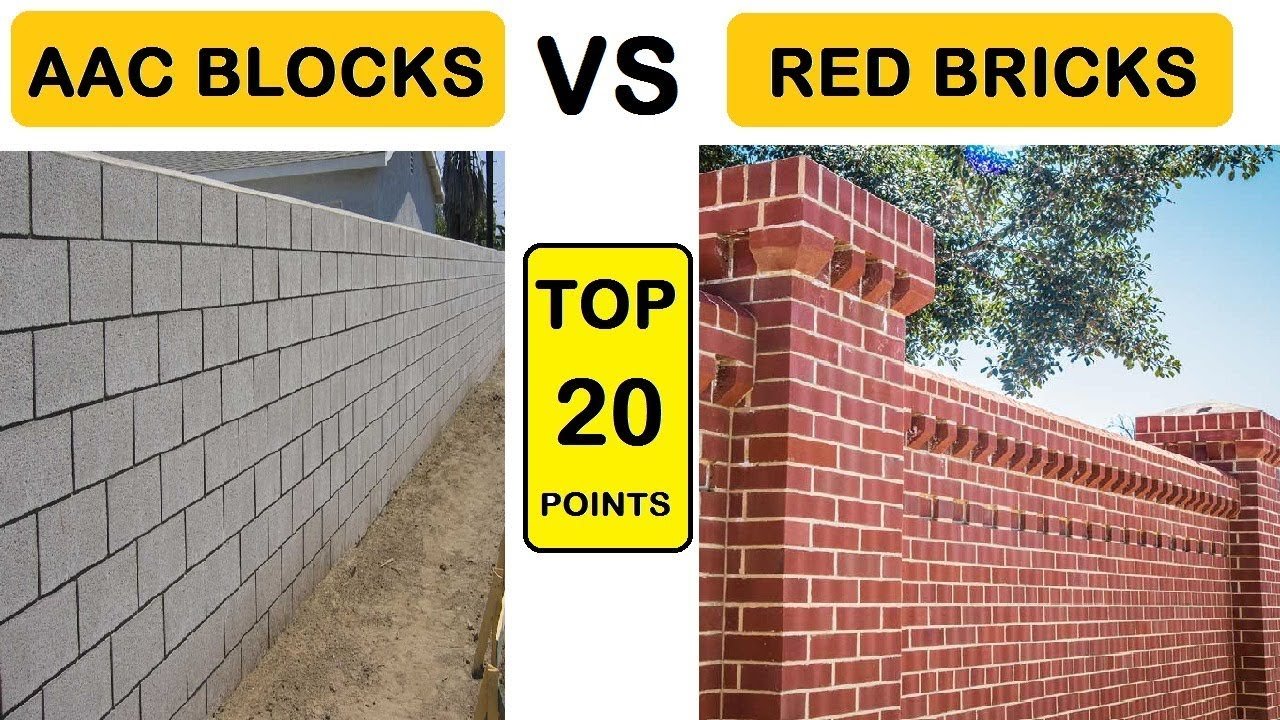
Choosing the right wall material is a key decision in any construction project. In India, AAC blocks and red clay bricks are the two most widely used masonry materials. Both have strengths and limitations. Both suit different project needs. This article explains the difference between AAC blocks and red bricks in detail, using simple English and complete paragraphs. It is written for Indian site conditions, climate, labour practices, and cost concerns.
This guide covers material properties, strength, cost, thermal comfort, durability, sustainability, construction practices, and real site performance.
AAC blocks vs red bricks, AAC blocks advantages, red brick construction, wall material comparison, cost of AAC blocks in India, brick masonry, and sustainable building materials are integrated naturally.
What Are AAC Blocks?
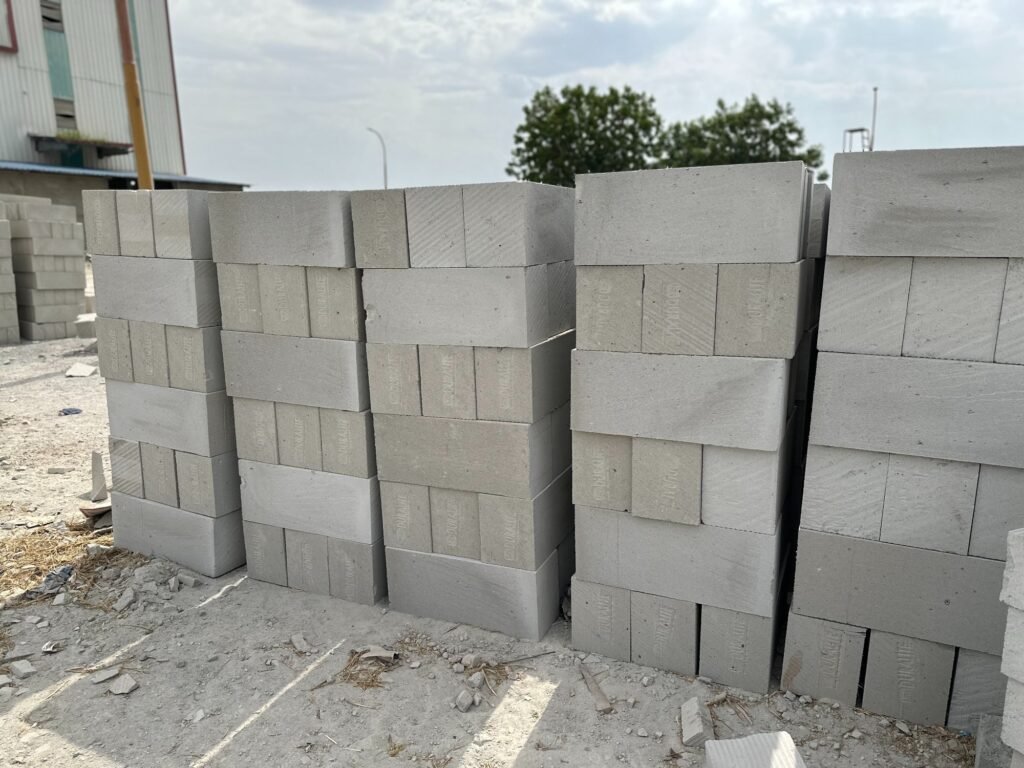
AAC stands for Autoclaved Aerated Concrete. AAC blocks are factory made walling units produced using cement, lime, sand, gypsum, water, and a small quantity of aluminium powder. The aluminium reacts with lime and creates tiny air bubbles. These bubbles form a cellular structure inside the block.
The blocks are cured under high pressure and temperature in autoclaves. This process gives AAC blocks uniform quality and predictable strength. AAC blocks are much larger in size and lighter in weight when compared to traditional bricks. They are widely used in modern residential, commercial, and high rise buildings across India.
What Are Red Clay Bricks?
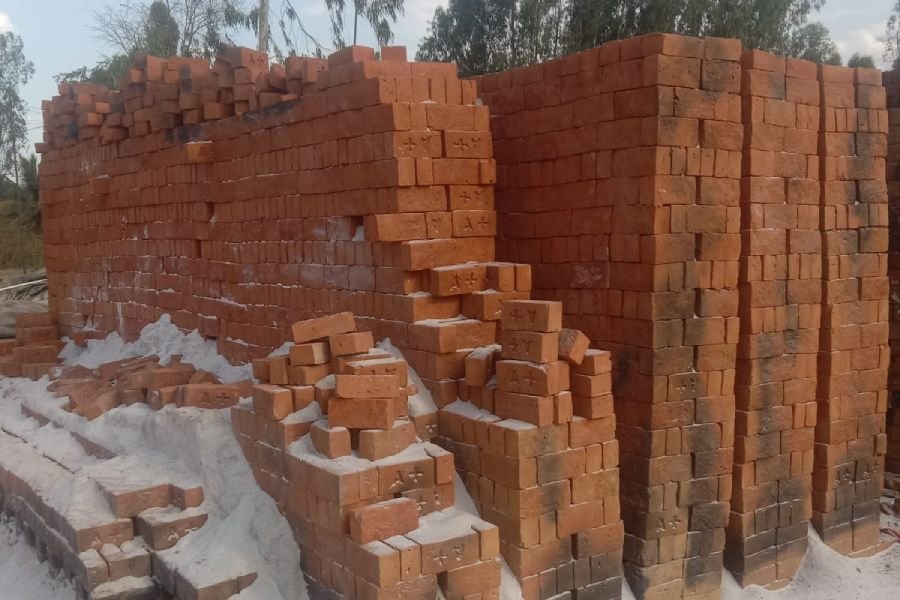
Red bricks are traditional masonry units made from natural clay. The clay is moulded into shape and then burnt in kilns at high temperatures. The burning process gives the brick its red colour and strength.
Red bricks have been used in India for centuries. They are commonly seen in houses, boundary walls, schools, temples, and old buildings. Brick masonry is familiar to most masons and contractors. Availability is wide due to local brick kilns across the country.
Also Read Why Footing Cracks Occur? — Complete Guide for Indian Construction
Basic Physical Difference Between AAC Blocks and Red Bricks
| Feature | AAC Blocks | Red Bricks |
|---|---|---|
| Manufacturing | Factory made in autoclave | Kiln fired clay |
| Size | Large block units | Small individual bricks |
| Weight | Lightweight | Heavy |
| Density | Low | High |
| Surface | Smooth and uniform | Rough and uneven |
| Shape accuracy | Very accurate | Varies by kiln |
Weight and Structural Load
AAC blocks are lightweight. Their low density reduces the dead load of the building. This is a major advantage in RCC framed structures. Lighter walls mean smaller column sizes, reduced steel quantity, and lower foundation load.
Red bricks are much heavier. Brick masonry adds significant dead load. This increases demand on beams, columns, and footings. In low rise houses this may not be a concern, but in multi storey buildings it affects overall cost.
Strength Comparison
Compressive strength is important for wall stability.
AAC blocks have moderate compressive strength. They are suitable for partition walls and external walls in framed buildings. They are not usually used as load bearing walls without special design.
Red bricks have higher compressive strength. Good quality burnt bricks can safely be used for load bearing masonry in low rise buildings.
Strength depends on manufacturing quality in both materials. Poor quality AAC blocks or under burnt bricks can fail easily.
Thermal Performance and Indoor Comfort
AAC blocks offer excellent thermal insulation. The air pockets inside the block slow down heat transfer. Buildings made with AAC blocks stay cooler in summer and warmer in winter. This reduces dependence on fans and air conditioners.
Red bricks have low insulation value. Heat passes through brick walls easily. In hot Indian summers, this results in higher indoor temperatures.
Thermal comfort is a major reason why AAC blocks are preferred in modern housing projects.
Sound Insulation Properties
AAC blocks provide good sound insulation due to their cellular structure. They reduce external noise from traffic and neighbouring units. This is useful in urban apartments and commercial buildings.
Red brick walls offer moderate sound insulation. Thicker brick walls improve sound performance, but this increases material and plaster cost.
Construction Speed and Labour Efficiency
AAC blocks are larger in size. Fewer blocks are required per square metre of wall. This increases construction speed. Labour productivity is higher and site progress improves.
Red brick masonry is slower. A large number of bricks are required. Mortar consumption is higher. Construction time increases.
AAC block construction needs trained masons. Red brick work can be done by traditional masons with basic skills.
Mortar and Plaster Requirements
AAC blocks are laid using thin joint mortar or polymer modified block adhesive. The joints are thinner and more uniform. Plaster thickness is usually lower due to smooth block surfaces.
Red bricks require thicker cement mortar joints. Brick surfaces are uneven, so plaster thickness is higher. This increases cement and sand consumption.
Water Absorption and Dampness
AAC blocks are porous and absorb water easily. If left exposed, they can absorb moisture from rain. Proper plastering and waterproof coatings are essential.
Red bricks also absorb water, especially if they are under burnt or poorly fired. Brick walls without proper plaster can develop dampness and efflorescence.
In both systems, good plastering, curing, and drainage are critical.
Cost Comparison in Indian Construction
| Cost Aspect | AAC Blocks | Red Bricks |
|---|---|---|
| Unit cost | Higher | Lower |
| Mortar consumption | Low | High |
| Plaster cost | Lower | Higher |
| Labour cost | Lower | Higher |
| Structural savings | Yes | No |
| Overall wall cost | Competitive | Moderate |
AAC blocks appear costlier initially, but total wall cost can be similar or even lower due to faster construction and material savings.
Environmental and Sustainability Impact
AAC blocks are considered eco friendly building materials. They use less raw material per unit volume. They generate less construction waste. Energy use is controlled in factory production.
Red brick manufacturing consumes large amounts of topsoil and fuel. Traditional brick kilns release smoke and pollutants. Brick production has a higher environmental impact.
For green buildings and sustainable construction, AAC blocks are a better choice.
Fire Resistance
AAC blocks are non combustible. They offer high fire resistance and do not release toxic fumes. This makes them suitable for high rise buildings and commercial spaces.
Red bricks are also fire resistant due to fired clay. Fire performance depends on wall thickness and mortar quality.
Durability and Maintenance
AAC block walls remain durable if protected from moisture. Proper plaster and paint ensure long service life.
Red brick walls are durable when quality bricks are used. Poor bricks may deteriorate due to salt attack and moisture.
Maintenance requirements for both systems are similar when construction quality is good.
Common Problems and Defects
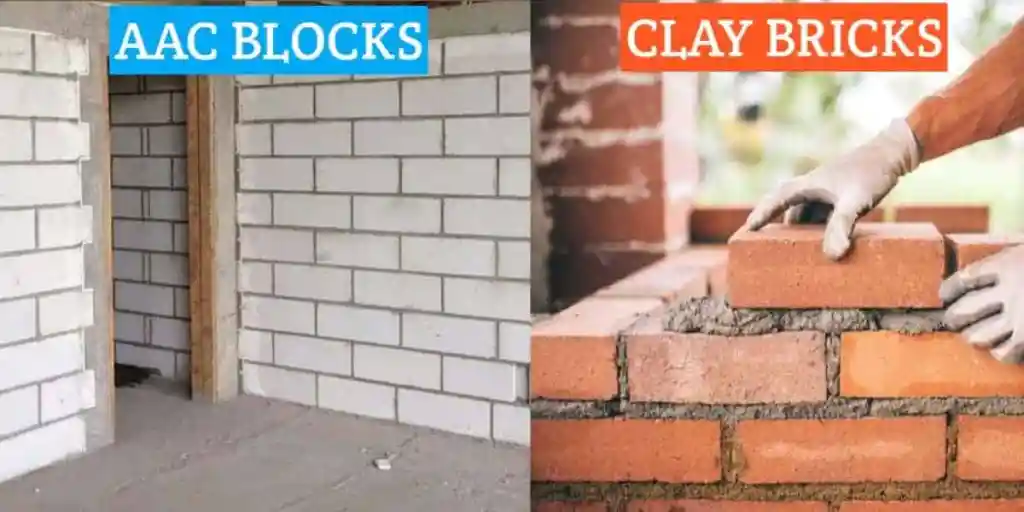
| Problem | AAC Blocks | Red Bricks |
|---|---|---|
| Cracks | Due to poor mortar or movement | Due to settlement or shrinkage |
| Dampness | Due to delayed plaster | Due to porous bricks |
| Efflorescence | Low | Common |
| Surface unevenness | Rare | Common |
Most problems occur due to poor workmanship, not the material itself.
When to Use AAC Blocks
AAC blocks are ideal for:
- RCC framed buildings
- High rise apartments
- Commercial buildings
- Projects needing fast construction
- Buildings in hot climates
- Sustainable and green projects
When to Use Red Bricks
Red bricks are suitable for:
- Load bearing houses
- Boundary walls
- Small residential projects
- Areas with easy local availability
- Projects with traditional labour
Frequently Asked Questions
Are AAC blocks stronger than red bricks?
No. Red bricks generally have higher compressive strength. AAC blocks are strong enough for partition and infill walls in framed structures.
Are AAC blocks good for Indian climate?
Yes. They perform very well in hot and mixed climates due to thermal insulation.
Do AAC blocks crack easily?
No. Cracks occur mainly due to poor installation, lack of control joints, or structural movement.
Are red bricks cheaper than AAC blocks?
Red bricks have lower unit cost. Total wall cost may be similar after considering plaster, labour, and construction speed.
Which material is better for sound insulation?
AAC blocks provide better sound insulation than red bricks.
Conclusion
AAC blocks and red bricks are both reliable construction materials when used correctly. AAC blocks represent modern construction with benefits like light weight, thermal comfort, faster execution, and sustainability. Red bricks represent traditional construction with proven strength and familiarity.
For modern RCC framed buildings in Indian cities, AAC blocks are often the better choice. For low rise load bearing structures and boundary walls, red bricks continue to perform well.
The final decision should consider structural design, climate, budget, labour availability, and long term performance. Good workmanship, proper mortar, correct curing, and timely finishing are more important than the material alone.