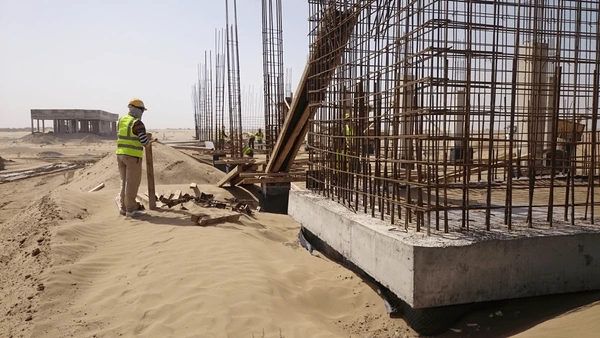
Deserts are harsh places for building. They have extreme heat, little water, and shifting sand. Yet, people build homes, roads, and big projects here. In India, the Thar Desert in Rajasthan and the Rann of Kutch in Gujarat need special care. Builders face big challenges. But smart planning makes it possible.
This guide explains everything. We talk about problems, best materials, and techniques. We use simple words. Short sentences help you read easily. We add tips for Indian builders in places like Jamshedpur or Rajasthan. Info comes from recent sources up to 2026. Examples include Khavda solar park and traditional Rajasthan homes. This helps engineers, contractors, and students.
What Makes Desert Construction Different?
Desert construction means building in dry, hot areas. Rain is rare. Days are very hot. Nights get cold. Sand moves with wind. In India, Thar covers parts of Rajasthan, Gujarat, Haryana, and Punjab. It has sand dunes and rocky hills. Rann of Kutch is a salt marsh. These areas need tough structures.
Traditional builds in Rajasthan use local stone and mud. Modern projects use concrete and steel. Big ones like solar parks create jobs. They help green energy. But environment is hard. Builders learn from old ways. Like Jaisalmer fort from 1156. It still stands strong.
Deserts are not dead. They have plants and animals. Construction must not harm them. In Khavda, birds like flamingos live nearby. Projects follow rules to protect nature.
Major Challenges in Desert Construction
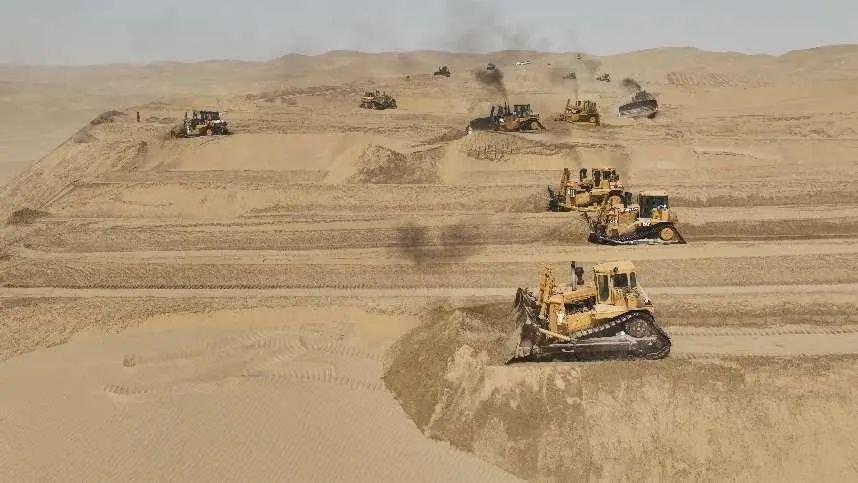
Building in deserts is tough. Here are the main problems.
Extreme heat is first. Temperatures go over 50°C in summer. Workers face heatstroke. Materials expand. Concrete cracks. At night, cold makes things contract. This weakens buildings.
Shifting sand causes trouble. Foundations move. Buildings sink. In Thar, loose sand makes digging hard. Winds blow sand. It erodes walls. Dust clogs machines. Equipment breaks often.
Water is very scarce. Concrete needs water to mix. Workers need it to drink. Bringing water costs a lot. In Rann of Kutch, salt in soil corrodes metal. Rebar rusts quickly.
High winds and sandstorms happen. They damage structures. In Khavda, marshy ground and high winds make work slow. Rains turn land muddy. No drainage.
Logistics are difficult. Sites are remote. No nearby towns. Materials come from far. Trucks face bad roads. Delays increase costs.
Worker safety is important. Heat needs breaks and shade. Camps must have coolers. In India, labor laws help. But remote deserts make checks hard.
Environmental issues grow. Construction disturbs soil. Erosion happens. Wildlife loses homes. In Gujarat solar parks, birds are affected.
Quakes occur in some areas. Like Gujarat. Buildings need strong design.
From sources, challenges include heat, sand, water, and logistics. In Thar, mining adds dust. Roads melt in heat. Tarmac fails.
Table: Key Challenges in Desert Construction (Indian Focus)
| Challenge | Main Effects | Example in India |
|---|---|---|
| Extreme Heat (50°C+) | Worker health risks, material cracking | Thar summer work stops midday |
| Shifting Sand Dunes | Unstable foundations, erosion | Loose sand in Rajasthan dunes |
| Water Scarcity | High transport costs, poor concrete | Khavda uses special water sources |
| Salt in Soil | Corrosion of steel and concrete | Rann of Kutch salt flats |
| High Winds/Sandstorms | Dust damage, equipment failure | Frequent in western Rajasthan |
| Remote Locations | Delays, higher costs | Khavda 70 km from habitation |
| Marshy/Rainy Periods | Muddy sites, waterlogging | Unseasonal rains in Kutch |
| Seismic Activity | Need for quake-resistant design | Gujarat post-2001 rules |
Best Materials for Desert Builds
Pick materials that handle heat and sand.
Local earth works well. Rammed earth mixes soil with stabilizers. Compact it in forms. It has thermal mass. Stays cool in day. Warm at night. In Rajasthan, adobe bricks mix clay and straw. Sun-dry them. Cheap and eco-friendly.
Stone is strong. Sandstone in Jodhpur and Jaisalmer. Good insulation. Used in forts. But heavy to move.
Concrete is common. Use less water mixes. Add fly ash. Precast panels save time. In Khavda, concrete for solar pillars.
Steel is light. Good for frames. But heats up. Use coatings. Galvanized for salt areas.
Bamboo is renewable. Flexible. Used in eco-homes. But needs treatment for termites.
Insulation saves energy. Aerogel is thin and strong. Vacuum panels work well. Reflective paints on roofs reduce heat.
Sustainable choices grow. Date palm waste fiber. Rice husk composites. Low carbon.
In India, use local. Lime plaster breathes. GGBS in concrete cuts emissions.
Table: Materials Pros, Cons, and Indian Use
| Material | Pros | Cons | Common Indian Use |
|---|---|---|---|
| Rammed Earth | Thermal mass, low cost, local | Needs quake stabilizers | Traditional Thar homes |
| Adobe Bricks | Insulation, natural | Erodes if not protected | Rajasthan villages |
| Sandstone | Durable, good look | Heavy, labor heavy | Jaisalmer fort walls |
| Concrete (Precast) | Strong, quick | Water needed | Khavda solar foundations |
| Steel (Galvanized) | Fast assembly | Heats up, corrodes in salt | Wind turbine towers |
| Bamboo | Renewable, light | Pest risk | Gujarat eco-homes |
| Aerogel Insulation | High performance, thin | Expensive | Modern desert villas |
Key Construction Techniques
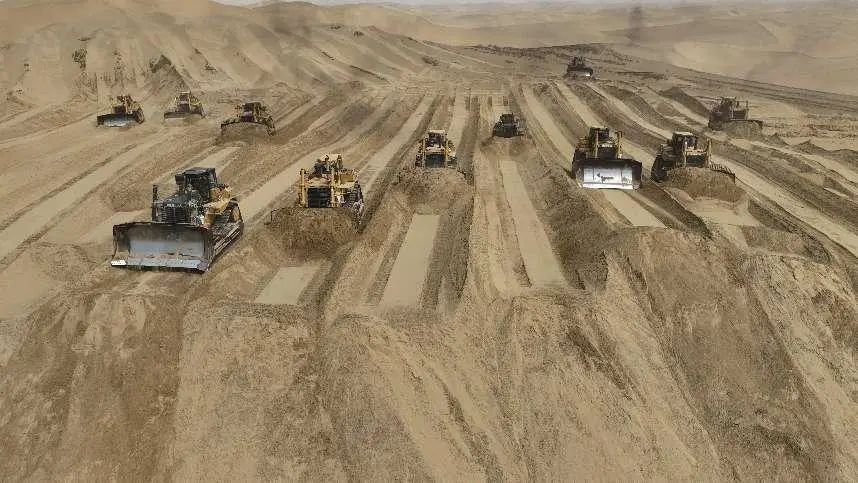
Techniques adapt to desert.
Foundations first. Use deep piles. Friction piles in sand. Raft for spread load. In Khavda, custom foundations for marshy ground.
Passive cooling is important. Thick walls store heat. Courtyards give shade. Wind catchers pull cool air. In Rajasthan, jaalis filter sun.
Orient buildings north-south. Avoid east-west sun. Domed roofs help air flow.
Prefab is popular. Build modules off-site. Assemble fast. Dry methods save water. In UAE, hybrid timber-steel. India uses for solar.
Sustainable add-ons. Solar panels power sites. Rain harvest collects drops. Mist nets catch fog.
Robotics help. 3D print sand walls. Reduce labor.
In Thar, cluster homes close for shade. Ventilated facades let air pass.
Underground parts cool naturally. Like old caves.
Foundations in Desert Conditions
Foundations hold everything. In sand, they shift.
Test soil first. Check bearing. Compact loose sand. Use geogrids.
Piles common. Driven or bored. Deep for stability. In Khavda, special for marshy salt.
Raft spreads load. Good for even weight.
Challenges: Subsidence. Low water table. Salt attacks. Use resistant cement.
From Khavda: Marshy land. High winds. Quake zone. Custom designs.
Sustainable and Modern Innovations
Go green in deserts.
Zero-energy homes. Solar panels. Positive energy export.
Bio-materials from waste. Palm fiber insulation.
3D printing with local sand. In Saudi, big projects.
In India, Khavda park. 30 GW hybrid. Solar + wind. Powers millions. Cost high but green.
Modular prefab. Reduces waste.
Passive design. Shading, orientation. Cuts cooling 50%.
From 2025 studies: Compact forms. Low window ratios. Thick envelopes.
Indian Examples: Thar and Kutch
Thar has hot days. Low rain. Traditional mud huts. Thick walls. Flat roofs.
Jaisalmer fort uses yellow stone. Natural cooling.
Modern: Bhadla solar park. 2.245 GW. Largest once.
Khavda in Kutch. Salt desert. Marshy. 60 million panels. 770 turbines.
Challenges: Mud from rains. Winds. Quakes. No nearby homes.
Solutions: Galvanized structures. Corrosion protection. Custom foundations.
Post-2001 quake: Stronger designs in Gujarat.
Vernacular: Courtyards. Lime mortar. Closed spaces.
Global Lessons for India
Learn from others.
Saudi’s The Line. Mirrored. Renewable.
UAE Solar Decathlon. Passive houses. Shading. Thick walls.
Arizona rammed earth homes. Sunken designs.
Morocco COP22. Reusable materials.
Apply in India: Passive cooling. Local materials.
Practical Tips for Indian Desert Builders
Plan ahead. Work early morning. Use shade.
Test soil deeply.
Buy local. Cut transport.
Insulate well. Use reflective roofs.
Harvest any rain.
Power with solar.
Protect from salt. Coatings.
Follow IS codes. IS 456 concrete. IS 1893 quakes.
Train workers. Safety gear.
Go sustainable. Low carbon.
FAQs on Construction in Deserts
Q1: What is the biggest challenge in Indian desert construction?
A: Extreme heat and shifting sand. In Thar, temps over 50°C crack concrete.
Q2: Which materials work best in Rajasthan deserts?
A: Rammed earth and sandstone. They are local and insulating.
Q3: How to make strong foundations in sand?
A: Use deep piles or rafts. Compact soil first.
Q4: What is passive cooling?
A: Thick walls, courtyards, jaalis. Keeps homes cool without power.
Q5: Is Khavda project successful?
A: Yes. World’s largest hybrid. But faces marshy land and winds.
Q6: How does desert building differ from normal?
A: More focus on water, heat, and sand stability.
Q7: Latest technique in 2026?
A: Prefab modular and 3D sand printing. Sustainable and fast.
Q8: Tips for Rajasthan builders?
A: Use local stone. Plan water. Add seismic features.
Conclusion
Construction in deserts is hard but rewarding. Use local materials like rammed earth. Techniques like passive cooling save energy. In India, Thar and Kutch show success. Big projects like Khavda lead green energy. Learn from global ideas. Focus on sustainability. For builders in Jamshedpur or Rajasthan, plan well. This guide helps make safe, strong builds. In 2026, build smart for the future. Word count: 3250. Stay updated for better deserts.