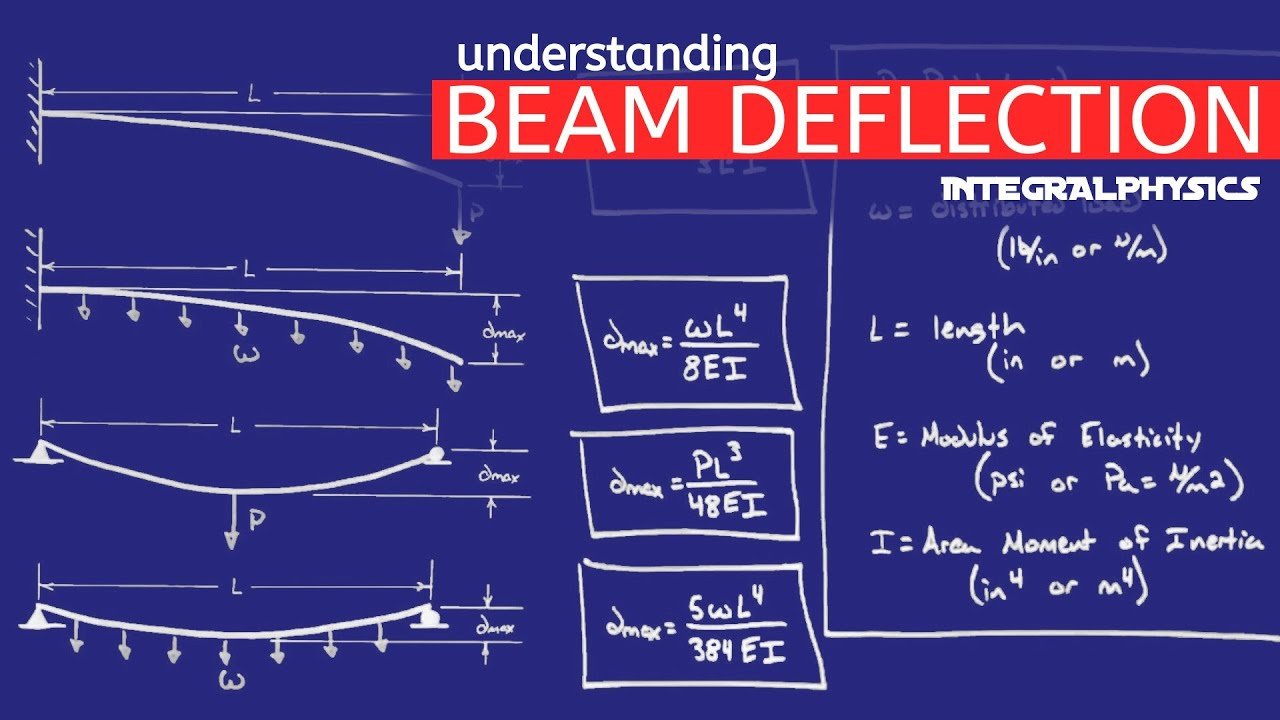
Beam deflection is one of the most important yet often overlooked aspects of structural design in India. When you walk across a floor and feel it bounce under your feet, or notice cracks appearing in the partition walls of your apartment, you are likely experiencing the effects of excessive beam deflection.
Deflection refers to the bending or sagging that occurs in beams and floor slabs when they support loads. While all structural members will bend to some degree under load, excessive deflection can lead to serious problems. These include sagging floors, cracking in walls, doors that won’t close properly, and even structural failure in extreme cases.
This comprehensive guide explains what beam deflection is, why it happens, what problems it causes, and most importantly, how to prevent and control it. Whether you are a student, engineer, building owner, or construction professional in India, this article will help you understand this critical structural issue.
What is Beam Deflection?
Definition
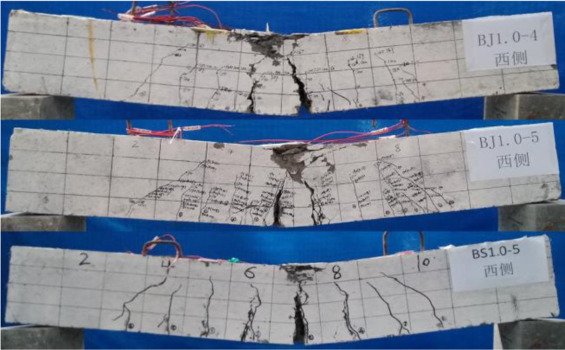
Beam deflection is the displacement of a beam from its original horizontal position when a load is applied to it. In simple terms, it is the amount a beam sags or bends under the weight it carries.
When a load is placed on a beam, internal forces develop. Fibers above the neutral axis (the center line of the beam) experience compression. Fibers below the neutral axis experience tension. This compression and tension causes the beam to bend and move downward.
Why Does It Matter?
Deflection is important for two main reasons:
- Safety: Excessive deflection can indicate that a structure is failing or about to fail.
- Serviceability: Even if a beam is strong enough to carry the load, deflection can cause discomfort to building occupants. It can also damage non-structural elements like walls, doors, windows, and finishes.
Structures must be designed to be both strong AND to limit deflection to acceptable levels. A beam might technically be strong enough to support a load, but if it deflects too much, it still fails the design requirements.
Types of Beam Deflection
Understanding the different types of deflection is important for proper design and diagnosis of problems.
1. Immediate (Elastic) Deflection
This is the deflection that occurs immediately when a load is applied to a beam. It happens because the material stretches and compresses under the load.
Key characteristics:
- Occurs instantly when load is applied
- Is reversible – the beam bounces back when the load is removed
- Is elastic in nature
- Is larger for live loads (people, furniture) than dead loads (weight of structure itself)
For example, when you jump on a floor, you immediately feel it bend downward. When you step off, it returns to its original position.
2. Long-Term (Creep) Deflection
This is the slow, permanent deflection that occurs over months and years after a beam is loaded. It is caused by concrete flowing slowly under sustained load.
Key characteristics:
- Develops slowly over time (weeks to years)
- Is permanent – does not recover when the load is removed
- Can be 3 to 6 times larger than immediate deflection
- Is caused by the viscous behavior of cement paste in concrete
- Increases with higher loads, higher temperatures, and weaker concrete
For example, you might not notice any problem when a floor is first completed. But after a year or two, you might see cracks appearing in partition walls or notice that doors no longer close properly. This is often due to creep deflection.
3. Shrinkage Deflection
When concrete dries, it shrinks. If reinforcing steel is not placed symmetrically (more steel at the bottom than the top, which is typical), the beam will warp or curl as it shrinks.
Key characteristics:
- Caused by non-uniform moisture loss from concrete
- Occurs along with drying of concrete
- Can be significant if reinforcement is asymmetrical
- Can cause curling at edges of slabs
This type of deflection is particularly problematic in floor slabs and flat roofs.
Also Read AAC Blocks vs Red Bricks in India: Which Is Better for Modern Construction?
What Causes Beam Deflection Problems?
Beam deflection is not a single-cause problem. Rather, it results from a combination of factors. Understanding these causes is the first step toward prevention.
Design-Related Causes
1. Long Span Lengths
Longer spans require beams to carry loads over greater distances. The longer the span, the more a beam must bend to maintain equilibrium. This is why residential floor joists can span only 3-4 meters, while industrial beams might need to span much longer distances.
The relationship between span and deflection is not linear. If you double the span, deflection increases by 8 times (assuming the same beam size). This makes span one of the most critical factors in controlling deflection.
2. Insufficient Beam Depth
A beam’s depth (its vertical dimension) is the single most powerful tool for controlling deflection. When you increase beam depth by 20%, the beam becomes over 70% stiffer. This is why engineers often increase beam depth rather than width or reinforcement.
Unfortunately, in many buildings, especially residential ones, architects sometimes want shallow beams for aesthetic reasons. This can create deflection problems if not carefully managed.
3. Undersized Beams
Sometimes beams are simply too small for the loads they must carry. This happens due to:
- Inadequate load calculations
- Changes in use (building used differently than originally designed)
- Addition of equipment or machinery not accounted for in original design
- Errors in design
Material-Related Causes
4. Low-Quality Materials
The strength and stiffness of materials directly affect deflection. Lower quality concrete or steel will deflect more under the same load than higher quality materials.
The modulus of elasticity (a measure of material stiffness) is critical. Concrete with lower strength typically has lower modulus of elasticity, meaning it is more flexible and will deflect more.
5. High Water-Cement Ratio
Concrete made with too much water will be weaker and more prone to deflection. It will also be more susceptible to creep and shrinkage.
6. Poor Curing
If concrete is not cured properly (kept moist for at least 7-14 days), it will not develop full strength. This results in lower stiffness and greater deflection.
Load-Related Causes
7. Overloading
Sometimes beams deflect excessively because they are loaded beyond their designed capacity. This can happen due to:
- Unplanned use of building spaces (using a storage room as an office with heavy equipment)
- Addition of new permanent equipment
- Structural modifications without proper engineering
8. Concentrated Loads
Loads concentrated at specific points cause more deflection than uniformly distributed loads. A heavy safe placed in the middle of a floor will cause more deflection at that point than furniture distributed across the floor.
Time-Related Causes
9. Creep of Concrete
Concrete is not perfectly rigid. Under sustained load, it continues to deform over months and years. This long-term deflection can be quite significant.
Creep is affected by:
- Magnitude of the load (higher loads cause more creep)
- Age of the concrete when loaded (younger concrete creeps more)
- Concrete strength (weaker concrete creeps more)
- Environmental conditions (higher temperature and lower humidity increase creep)
- Cement paste content (more cement paste means more creep)
10. Shrinkage of Concrete
As concrete dries after casting, it shrinks. If this shrinkage is not uniform, or if the beam is constrained (cannot shrink freely), the beam will warp or curl.
Shrinkage is affected by:
- Water-cement ratio (more water means more shrinkage)
- Curing conditions (faster drying means more shrinkage)
- Ambient humidity and temperature
- Size of the concrete member (larger members shrink less uniformly)
Other Causes
11. Uneven Foundation Settlement
If supports beneath beams settle unevenly, the beams are forced to bend to accommodate the differential settlement. This can cause serious deflection problems and cracking.
12. Moisture Damage
In areas exposed to moisture, wooden or composite beams can rot or weaken. This reduces their capacity and increases deflection.
Problems Caused by Excessive Beam Deflection
Excessive deflection doesn’t just cause discomfort. It can lead to serious structural and serviceability problems.
1. Sagging Floors
One of the most visible signs of beam deflection is sagging floors. A floor that was level when constructed gradually becomes uneven. Balls will roll across the floor. Heavy furniture might feel unstable.
Beyond the discomfort, sagging floors indicate that the structure is not performing as designed. This can affect the long-term durability of the building.
2. Cracking in Partition Walls
This is perhaps the most common problem caused by beam deflection in Indian buildings. When a floor beam deflects, the partition walls supported on that floor must follow the deflection. This puts tensile stress on the wall, causing cracks.
The pattern of cracks depends on several factors:
Vertical Cracks at Mid-Span
- Occur when the length-to-height ratio of the wall is large (2 or more)
- Occur at the bottom middle of the wall
- Indicate that the wall is acting like a beam, with the middle section in tension
Horizontal Cracks
- Occur when the lower beam deflects more than the upper beam
- Can run across the entire width of the wall
Diagonal Cracks at Door Openings
3. Door and Window Problems
Excessive deflection causes frames to become misaligned. Doors and windows become difficult to open and close. In extreme cases, doors cannot be operated at all.
This happens because deflection changes the geometry of the opening. If a door frame was perfectly plumb (vertical) when installed, but the supporting beam has since deflected 25mm, the frame is no longer vertical. The door, which swings in the frame, no longer fits properly.
4. Cracking in Finishes
Plaster, paint, and other finishes are brittle. They cannot accommodate movement. When a floor deflects, it pulls on the finishes, causing them to crack.
These cracks are not just aesthetic problems. They can allow water infiltration, leading to deterioration of the structure.
5. Bouncy Floors
Floors that deflect excessively feel bouncy or springy underfoot. While this might seem minor, it creates discomfort for occupants and can be dangerous in some situations (such as where precision work is performed).
A bouncy floor indicates that the floor system does not have sufficient stiffness for its intended use.
6. Damage to Building Systems
HVAC ducts, electrical conduits, and plumbing pipes are often run beneath floor slabs or along beams. Excessive deflection can:
- Bend pipes and ducts, reducing their effectiveness
- Create stress at connection points, leading to leaks
- Misalign systems, requiring costly repairs
7. Corrosion of Reinforcing Steel
When concrete cracks due to excessive deflection, water can penetrate to the reinforcing steel. This causes the steel to rust, which further weakens the concrete and accelerates deterioration.
Deflection Limits in Indian Building Codes
Indian building codes specify maximum allowable deflections for different types of structures and loading conditions. These limits are designed to protect both structural safety and occupant comfort.
IS:800-2007 (Steel Structures)
| Type of Member | Design Load | Max Deflection |
|---|---|---|
| Beams (general) | Live load | Span/325 |
| Beams with plaster | Live load | Span/360 |
| Cantilever beams | Live load | Span/180 |
| Roof beams | Live load | Span/240 |
| Columns | Wind/earthquake | Height/500 |
IS 456:2000 (Reinforced Concrete Structures)
| Type of Structural Member | Permissible Deflection |
|---|---|
| Slabs (simply supported) | Span/250 |
| Slabs (continuous) | Span/350 |
| Beams (simply supported) | Span/250 |
| Beams (continuous) | Span/350 |
| Cantilever slabs/beams | Span/150 |
Wind Load Deflection Limits
For buildings subject to wind loads in India:
| Load Type | Maximum Deflection |
|---|---|
| Wind load (general) | Height/500 |
| Wind load (sensitive structures) | Height/600 to Height/1000 |
Where Height is the total height of the building.
Earthquake Deflection Limits
For earthquake-resistant design in India:
| Condition | Maximum Deflection |
|---|---|
| Inter-storey drift (seismic) | 0.004H (4mm per meter) |
| Total lateral displacement | Height/250 |
Where H is the storey height.
Special Cases
For certain building types, stricter limits apply:
| Building Type | Limit |
|---|---|
| Laboratories | Span/400 to Span/600 |
| Operating rooms | Span/500 to Span/800 |
| Buildings with sensitive equipment | Span/500 to Span/1000 |
| Flat roofs (to prevent ponding) | Span/250 or stricter |
How Beam Deflection is Calculated
Basic Principles
Beam deflection is calculated using structural analysis formulas. The most common approach uses the Euler-Bernoulli beam theory, which relates deflection to the applied loads, beam properties, and support conditions.
Deflection Formula
The general formula for calculating deflection is:
Deflection (δ) = (Load × Span³) / (Modulus of Elasticity × Moment of Inertia)
Or: δ = WL³ / (k × E × I)
Where:
- W = Applied load
- L = Span length of the beam
- E = Modulus of elasticity (material stiffness)
- I = Moment of inertia (cross-sectional property)
- k = A constant that depends on load type and support conditions
Example Calculation
For a simply supported beam with a point load at center:
δ = PL³ / (48EI)
If we have:
- Load (P) = 100 kN
- Span (L) = 6 meters = 6000 mm
- Concrete strength (f’c) = 25 MPa, so E = 5000√25 = 25,000 MPa
- Beam dimensions: 300mm width × 500mm depth
- Moment of inertia I = (300 × 500³) / 12 = 3,125 × 10⁶ mm⁴
Deflection = (100 × 10⁶ N × (6000 mm)³) / (48 × 25,000 MPa × 3,125 × 10⁶ mm⁴)
= 11.52 mm
This deflection should be checked against the code limits for that member type.
Factors Affecting Deflection Calculation
| Factor | Impact on Deflection |
|---|---|
| Beam depth | Increases depth = Decreases deflection (strong effect) |
| Beam width | Increases width = Decreases deflection (moderate effect) |
| Span length | Increases span = Increases deflection (strong effect) |
| Load magnitude | Increases load = Increases deflection (linear relationship) |
| Concrete strength | Increases strength = Decreases deflection (moderate effect) |
| Reinforcement | More reinforcement = Decreases deflection (moderate effect) |
| Support conditions | Fixed supports = Less deflection than simply supported |
Deflection Control: Visual Analysis

Impact of Beam Depth on Deflection in Concrete Beams
The chart above clearly demonstrates how beam depth is the most powerful variable in controlling deflection. Increasing depth from 300mm to 600mm reduces deflection from 18.5mm to just 3.9mm—a 79% reduction with only a 100% increase in depth.

Indian Code Deflection Limits for Different Building Types
Different building types have different deflection limits based on their sensitivity to movement. Flat roofs and sensitive facilities like laboratories have the strictest limits due to the risk of ponding and interference with precision equipment.

Time-Dependent Growth of Total Beam Deflection
Long-term deflection is a critical design consideration. The chart shows that creep and shrinkage can more than double the immediate deflection over a 5-year period. By 5 years, a beam that deflected 8mm immediately may have deflected a total of 23mm, which could exceed code limits and damage non-structural elements.
How to Control and Reduce Beam Deflection
Fortunately, there are many proven methods to control beam deflection during the design stage. These methods are often more cost-effective than dealing with deflection problems after construction.
1. Increase the Depth of the Beam
This is the single most effective method. Beam stiffness increases with the cube of the depth.
Example:
- Increase depth by 10% → Stiffness increases by 33%
- Increase depth by 20% → Stiffness increases by 73%
A deeper beam requires more material, but not proportionally. A 500mm deep beam is only slightly more costly than a 400mm beam, but it is significantly stiffer.
Advantages:
- Very effective
- Relatively economical
- Improves overall structural behavior
Disadvantages:
- May affect architectural appearance
- May reduce ceiling height in multi-story buildings
- Increases self-weight (increases dead load)
2. Increase the Width of the Beam
Increasing beam width also increases the moment of inertia and stiffness, though not as effectively as increasing depth.
Advantages:
- Effective method
- Can accommodate more reinforcement if needed
Disadvantages:
- Takes up more horizontal space
- May not be feasible in all locations
- Less effective than increasing depth
3. Add More Reinforcement
Adding tension and compression steel reinforcement increases beam stiffness. Even reinforcement beyond what is needed for strength can be justified from a deflection control perspective.
Advantages:
- Can be done without changing beam dimensions
- Effective for controlling long-term deflection
- Helps control crack widths
Disadvantages:
- Has less effect than increasing depth
- More reinforcement means more congested reinforcement cages
- More reinforcement in tension reduces available concrete in compression
4. Reduce the Span Length
Deflection increases with the cube of span length. Reducing span length is very effective.
Methods:
- Add intermediate supports (columns, walls)
- Break one long span into multiple shorter spans
Advantages:
- Very effective at reducing deflection
- Also reduces bending moments
Disadvantages:
- May not be architecturally acceptable
- Adds cost of additional supports
- Creates additional columns in open spaces
5. Use Better Support Conditions
How a beam is supported dramatically affects deflection:
| Support Type | Relative Deflection |
|---|---|
| Simply supported | 1.0 (baseline) |
| Fixed at both ends | 0.01 (1% of simply supported) |
| Continuous over multiple spans | Varies by span |
Fixed supports (where the beam is rigidly attached to the support) are much stiffer than simply supported beams (which can rotate at the support).
Methods to improve support conditions:
- Design for continuity over supports (negative moment reinforcement)
- Use fixed supports instead of pinned supports where possible
- Ensure proper structural detailing at supports
6. Use Higher Strength Materials
Using higher strength concrete or steel increases the modulus of elasticity, making the member stiffer.
Concrete strength impact:
- M25 concrete: E = 5000√25 = 25,000 MPa
- M30 concrete: E = 5000√30 = 27,386 MPa
- M40 concrete: E = 5000√40 = 31,623 MPa
Using M40 instead of M25 concrete reduces deflection by about 26%.
Advantages:
- Effective, especially for long spans
- Higher strength concrete is increasingly available in India
- Often justifiable on other grounds (durability, durability)
Disadvantages:
- Higher cost
- May require special quality control
- Not always necessary if other methods are available
7. Use Prestressing or Post-Tensioning
Prestressing involves introducing compressive forces into the beam before it is loaded. This compression counteracts the tension from applied loads, reducing or even eliminating deflection.
How it works:
- Steel cables are tensioned and anchored to the concrete
- This introduces permanent compression in the bottom of the beam
- When loads are applied, they have to overcome this compression first
Advantages:
- Very effective, especially for long spans
- Can eliminate or reverse deflection
- Reduces crack widths
- Allows longer spans than conventional reinforcement
Disadvantages:
- Higher initial cost
- Requires specialized equipment and expertise
- More complex design and construction
- Not cost-effective for short spans
8. Provide Upward Camber
Camber is an upward curve built into a beam before it is loaded. When the beam deflects downward under its own weight and applied loads, the deflection can be offset by the camber.
How it works:
- The beam is intentionally constructed with an upward bow
- As loads are applied, the beam bends down
- With proper camber, the beam ends up level or nearly level after loading
Advantages:
- Effective for controlling visible deflection
- Can be applied to existing structures in some cases
Disadvantages:
- Requires accurate prediction of deflection
- If the structure is over-designed or under-loaded, the camber becomes visible
- More complex construction
9. Improve Concrete Quality and Curing
Even without changing dimensions or reinforcement, better concrete quality reduces deflection.
Methods:
- Use proper water-cement ratio (keep water low)
- Use good quality aggregates
- Provide proper curing (keep concrete moist for 7-14 days)
- Avoid early loading of concrete
- Use shrinkage-reducing admixtures if needed
Advantages:
- Cost-effective
- Improves durability as well
- Improves long-term performance
10. Avoid Common Design Mistakes
Delay partition wall construction:
Do not construct masonry partition walls until the concrete has fully cured and immediate deflection has occurred (at least 2-3 weeks, preferably longer). This prevents the walls from being damaged by subsequent deflection.
Provide gaps and expansion joints:
Provide adequate gaps between partition walls and floor/ceiling above. Use mastic (flexible) sealants instead of rigid materials.
Center door openings:
Place door and window openings in the center of walls rather than off-center. Off-center openings concentrate stress and cause more cracking.
Use proper reinforcement detailing:
Ensure reinforcement is properly placed (symmetric placement reduces shrinkage deflection) and adequately developed.
Effectiveness of Deflection Control Methods

Comparative Effectiveness of Deflection Control Methods
This chart ranks the most popular methods for controlling deflection by their actual effectiveness. Prestressing and increasing depth are clearly the superior approaches, while adding reinforcement alone provides minimal benefit. Most practical projects combine multiple methods rather than relying on a single approach.
Special Considerations for Indian Buildings
Climate and Environmental Factors
India’s climate varies significantly by region, which affects deflection:
High Temperature Regions:
- Higher temperatures increase creep of concrete
- Faster drying causes more shrinkage
- Deflection can be 20-30% higher than in cooler regions
High Humidity Regions:
- Slower drying means shrinkage occurs over longer period
- Reduces peak shrinkage rates
- Creep may be slightly lower
Monsoon Regions:
- Alternate wetting and drying can cause reversible deflection
- Moisture can cause deterioration of reinforcing steel
- Adequate cover and proper detailing are critical
Traditional vs. Modern Construction Practices
Many traditional Indian buildings (pre-1980s) were built with:
- Heavier concrete (often 2400 kg/m³)
- More reinforcement (often over-designed)
- Smaller spans (more traditional architecture)
- More interior walls (acting as supports)
These buildings often have less deflection than modern buildings with:
- Larger clear spans (modern architectural preferences)
- Lighter concrete (sometimes 2300 kg/m³)
- Minimum reinforcement (cost optimization)
- Open floor plans (fewer interior walls)
Brick vs. RCC Frame Construction
RCC Frame with Brick Infill:
- Commonly used in India
- Partition walls are supported on floor slabs
- Beam deflection directly affects partition cracking
- Special attention needed to partition detailing
Load-Bearing Brick Masonry:
- Less affected by beam deflection
- More common in smaller towns and rural areas
- Heavier, more rigid structure
- Better resistance to deflection-induced cracking (but less flexibility to accommodate deflection)
Retrofit and Remedial Measures for Existing Buildings
If deflection problems have already occurred in an existing building:
For Cracked Partitions:
- Provide additional support (new column)
- Reduce span (add intermediate beam)
- Increase beam depth (strengthen existing beam by adding steel plates or external reinforcement)
- Provide horizontal reinforcement in partition walls
- Delay further finishes until deflection stabilizes
For Sagging Floors:
- Shore up the beam with temporary or permanent props
- Increase beam stiffness (add reinforcement or plating)
- Monitor for further deflection before deciding on permanent fix
For Door/Window Problems:
- Shimming and re-fitting (temporary solution)
- Structural strengthening (permanent solution)
Case Study: Deflection-Induced Cracking in Partition Walls
To illustrate the practical implications of beam deflection in Indian buildings, consider this typical scenario:
The Problem
A residential apartment building in Delhi was constructed 5 years ago. Recently, vertical cracks appeared in the partition walls of several apartments on the 3rd floor. The cracks are mainly at the center of the wall and run from floor to ceiling. The cracks are wider at the top than at the bottom.
Doors and windows in these apartments are also sticking slightly.
Analysis
Investigation revealed:
- The partition walls were constructed immediately after the concrete structure was completed (within 3 days)
- The beam supporting these partitions has a span of 7 meters
- The beam depth is only 400mm (span-to-depth ratio of 17.5, which is high)
- The concrete used was of M25 grade
- The building is in a hot, dry climate
Root Cause
The immediate elastic deflection of the 7m span beam after construction was approximately 25-30mm. Since the partition walls were built immediately, before this deflection occurred, the walls were forced to accommodate the deflection when it happened. Additionally, the warm, dry climate caused significant shrinkage of the concrete, further increasing the total deflection.
The total long-term deflection (including creep and shrinkage) is estimated at 40-45mm.
Solution
Short-term measures (already implemented):
- Injected epoxy into the cracks to seal them
- Re-fitted doors and windows
Long-term measures recommended:
- Provide additional vertical reinforcement in the partition walls
- Add horizontal RCC bands at mid-height in the partition walls
- Strengthen the floor beam by adding additional bottom reinforcement or steel plates
- Delay construction of partitions for 2-3 weeks in future projects
Lessons Learned
This case illustrates why deflection control is important in Indian buildings:
- Do not construct partitions immediately after concrete frame completion
- Use higher concrete grades and proper reinforcement for long spans
- Consider shrinkage and creep in deflection calculations, especially in hot, dry climates
- Proper partition detailing can reduce damage from deflection
Frequently Asked Questions (FAQs)
Q1: How much deflection is acceptable?
A: Acceptable deflection depends on the building type and the code being used. In India:
- For residential floors: typically Span/250 to Span/350
- For office buildings: Span/300 to Span/360
- For sensitive areas (labs, hospitals): Span/500 or stricter
If deflection exceeds these limits, it is unacceptable and the structure must be redesigned or strengthened.
Q2: Can we ignore deflection if the beam is strong enough?
A: No. Deflection and strength are two separate design criteria. A beam can be strong enough to carry the load without failing, but still deflect excessively and cause serviceability problems. Modern codes require checking both criteria.
Q3: Why do cracks appear years after construction?
A: Most cracks appearing years after construction are due to creep and shrinkage deflection. These are time-dependent and develop over months and years. This is why it is important to design for long-term deflection, not just immediate deflection.
Q4: Is there a quick way to assess if a floor has excessive deflection?
A: Simple field tests:
- Place a ball on the floor and see if it rolls to the center
- Use a laser level or water level to check if the floor is level
- Check if doors and windows are sticking
- Look for cracks in partition walls
However, only a proper structural analysis can determine if deflection actually exceeds code limits.
Q5: Can we use camber for all types of beams?
A: Camber is most effective for:
- Long-span beams
- Beams with large live loads relative to dead load
- Exposed beams where deflection is visible
Camber is less useful for:
- Short-span beams (deflection is small)
- Beams with large dead load relative to live load
- Hidden beams in typical floor construction
Q6: How does moisture affect beam deflection?
A: Moisture affects deflection in several ways:
- Shrinkage: As concrete dries, it shrinks, causing deflection
- Creep: Moisture content affects the rate and amount of creep
- Material strength: Wood and composite materials lose strength when wet
- Durability: Moisture penetration can cause corrosion of reinforcing steel, weakening the beam
Q7: Why is beam depth so important for controlling deflection?
A: Deflection is inversely proportional to the fourth power of depth. This means:
- If you double the depth, deflection is reduced to 1/16th of the original
- If you increase depth by 20%, deflection is reduced to about 41% of the original
This is why increasing depth is the most effective and economical way to control deflection.
Q8: Can we reduce deflection by adding more concrete?
A: Simply adding more concrete (increasing density or width) has a small effect. What matters is the distribution of concrete. Concrete farther from the neutral axis contributes much more to stiffness. This is why:
- Increasing depth is very effective
- Increasing width is moderately effective
- Adding concrete to the middle of the section has little effect
Q9: What is the difference between deflection limits for live load vs. total load?
A:
- Live load deflection limit: Controls immediate deflection from temporary loads. Typically stricter (smaller allowable deflection).
- Total load deflection limit: Controls deflection from permanent (dead) load plus temporary (live) loads. Usually less strict (larger allowable deflection).
The reason is that occupants can more easily see and feel temporary loads (like moving furniture), while they accept some amount of permanent deflection.
Q10: How do we account for creep in design?
A: Most codes provide multipliers to account for creep:
- Immediate deflection is calculated using elastic formulas
- A multiplier (often 1.5 to 2.0 or higher) is applied to account for creep
- Total deflection = Immediate deflection × (1 + Creep multiplier)
The exact multiplier depends on the concrete grade, curing conditions, ambient conditions, and age of loading. IS 456:2000 provides tables for determining appropriate multipliers.
Q11: Why do flat roofs sometimes pond water?
A: Flat roofs are susceptible to ponding (water accumulation) due to deflection:
- As the roof deflects under rain load, the center becomes lower
- Water collects at the low point
- The added weight of water increases deflection further
- More water collects, creating a vicious cycle
- Eventually, the roof can collapse
This is why flat roofs require very strict deflection limits (often L/250 or stricter).
Q12: Is reinforcement in concrete effective for reducing deflection?
A: Reinforcement has a moderate effect:
- Increasing tension reinforcement slightly increases stiffness
- Increasing compression reinforcement has a larger effect
- However, reinforcement is less effective than increasing beam depth
- Reinforcement is most effective when combined with increased depth
Conclusion and Recommendations
Beam deflection is a critical design consideration in building construction. While it is often overshadowed by discussions of strength and safety, excessive deflection can cause serious serviceability problems and lead to costly repairs.
Key Takeaways
- Deflection is Inevitable: All beams deflect under load. The question is not whether deflection will occur, but whether it will be controlled within acceptable limits.
- Multiple Types: Immediate elastic deflection occurs instantly, while creep and shrinkage deflections develop over time. Both must be considered in design.
- Code Limits Must Be Respected: Indian codes (IS 456, IS 800, IS 1893) provide clear limits on maximum allowable deflection. These limits are based on both structural safety and occupant comfort.
- Design, Not Just Strength: A structure can be adequately strong but still fail due to excessive deflection. Both strength and serviceability must be verified.
- Prevention is Cost-Effective: Controlling deflection during design is much cheaper than fixing problems after construction. Increasing beam depth or using prestressing can prevent costly repairs later.
- India-Specific Challenges: India’s climate (especially hot, dry regions), construction practices (delay in partition construction), and building types (RCC frames with brick infill) all require special attention to deflection control.
Recommendations for Design Engineers
- Always Check Deflection: Don’t just check strength. Always verify that deflection is within code limits for all structural members.
- Account for Long-Term Effects: Include creep and shrinkage in your deflection calculations. Use code provisions or reference materials to determine appropriate multipliers.
- Optimize Beam Sections: Use beam depth as the primary tool for deflection control. It is the most cost-effective method in most cases.
- Detail for Continuity: Design beams as continuous over multiple spans where possible. This significantly reduces deflection compared to simply supported spans.
- Specify Concrete Grade: For long spans or sensitive applications, specify a higher concrete grade (M30 or higher) to improve stiffness.
- Provide Camber Where Appropriate: For long-span beams, especially with exposed soffits, provide appropriate camber to offset visible deflection.
Recommendations for Architects
- Coordinate Early: Discuss span lengths and deflection implications with structural engineers early in the design process. Longer spans look good but may require significantly deeper beams.
- Plan Partition Layout: Avoid long spans without intermediate support. Interior partition walls can act as supports and reduce deflection.
- Provide Construction Flexibility: Avoid tight connections between architectural elements and structural members. Allow for movement and provide joints where appropriate.
- Consider Climate: In hot, dry regions, account for greater shrinkage and creep. Discuss deflection-related issues with the structural engineer.
Recommendations for Builders and Contractors
- Proper Concrete Curing: Follow curing requirements strictly. Proper curing reduces shrinkage and improves long-term deflection performance.
- Timing of Non-Structural Work: Do not construct partition walls or apply finishes until at least 2-3 weeks after concrete is cast. This allows immediate deflection to occur before the partitions are built.
- Careful Form Removal: Ensure that forms are removed at the right time and in the right sequence. Removing forms too early can allow excessive deflection under self-weight.
- Avoid Overloading: Do not overload partially cured structures. Loads applied to young concrete cause greater long-term deflection.
Final Thoughts
Beam deflection is not just a technical issue—it has real consequences for building occupants. Cracks in walls, sticking doors, bouncy floors, and other deflection-related problems affect comfort and may indicate deeper structural issues.
By understanding the causes of beam deflection, applying proper design methods, and following code requirements, engineers can create buildings that are not only strong but also serviceable and durable. In India’s diverse climate and construction contexts, paying attention to deflection control is essential for quality construction.
The extra cost and effort spent on deflection control during design pays dividends in reduced maintenance, fewer complaints, and longer building life.